How to Reduce Stress Naturally: 15 Science-Backed Methods (2026 Guide)
Stress is a common part of modern life, but managing it naturally can make a big difference in your health and energy. At GlowFit, we focus on simple habits that support both mental and physical well-being. In this guide, you’ll learn how to reduce stress naturally using science-backed methods that fit into a healthy and active lifestyle.
Understanding Stress and Cortisol
What Is Cortisol and Why It Matters
Cortisol is often called the “stress hormone,” but that’s only half the story. In healthy amounts, cortisol helps you wake up, focus, and respond to challenges. Problems arise when cortisol stays elevated for too long.
Chronic stress keeps your body in survival mode, disrupting sleep, mood, immunity, and metabolism.
Short-Term vs Chronic Stress
Short-term stress is like a fire alarm—it alerts you, then shuts off. Chronic stress is like an alarm that never stops ringing. Over time, this wears down both your mind and body.
The Science Behind Natural Stress Relief
Stress activates the sympathetic nervous system (fight or flight). Natural stress relief works by activating the parasympathetic nervous system—your “rest and digest” mode.
Think of it like switching gears in a car. You can’t relax while stuck in overdrive.
15 Science-Backed Ways to Reduce Stress Naturally
1. Deep Breathing Techniques
Slow, intentional breathing directly lowers cortisol and heart rate.
Try this: Inhale for 4 seconds, exhale for 6 seconds. Just 5 minutes can calm your nervous system.
2. Somatic Exercises for Stress
Somatic exercises work bottom-up, calming the body first so the mind follows.
Examples include gentle shaking, grounding your feet, or body scanning. These techniques are especially effective for stored tension and anxiety.
3. Regular Physical Activity
Movement is one of the most powerful cortisol management techniques available.
Low-impact activities like walking, yoga, and stretching are especially effective for holistic stress relief.
4. Optimize Sleep Hygiene
Poor sleep increases cortisol. Good sleep lowers it.
Stick to consistent sleep times, reduce blue light at night, and keep your bedroom cool and dark.
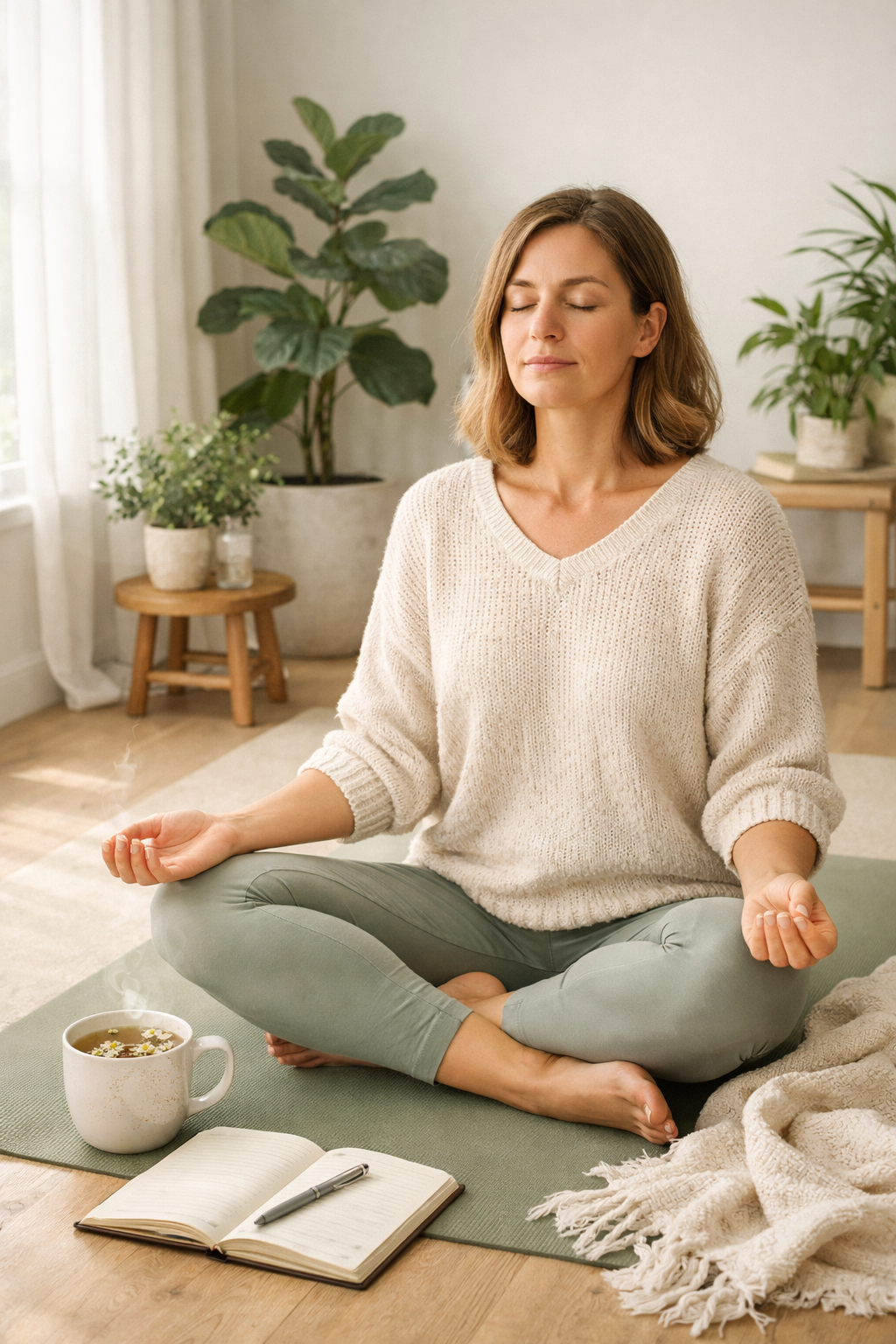
5. Mindfulness and Meditation
Mindfulness trains your brain to respond instead of react.
Just 10 minutes a day has been shown to reduce anxiety, improve focus, and regulate emotional responses.
6. Nature Exposure (Green Therapy)
Spending time in nature lowers cortisol, blood pressure, and heart rate.
Even a short walk in a park can act as a natural anxiety remedy.
7. Nutrition for Cortisol Management
Your stress levels are influenced by what you eat.
Focus on:
- Magnesium-rich foods (leafy greens, nuts)
- Omega-3s (fish, flaxseeds)
- Complex carbs (oats, quinoa)
8. Reduce Stimulants Naturally
Too much caffeine or sugar keeps your nervous system overstimulated.
Gradual reduction—not elimination—helps prevent withdrawal stress.
9. Herbal and Natural Anxiety Remedies
Evidence-supported options include:
- Ashwagandha (adaptogen for cortisol balance)
- Chamomile (calming effects)
- Magnesium (supports nervous system function)
Always consult a healthcare professional before supplementation.
10. Digital Detox and Screen Boundaries
Constant notifications keep your brain in alert mode.
Create screen-free times, especially before bed, to reduce mental overload.
11. Social Connection and Emotional Safety
Safe relationships lower stress hormones and increase oxytocin.
Even brief positive interactions can buffer stress.
12. Journaling and Emotional Expression
Writing helps your brain process stress instead of storing it.
Try expressive journaling for 10 minutes without editing or judging.
13. Breath + Movement Practices
Practices like Tai Chi and Qigong combine movement, breath, and focus—making them powerful tools for holistic stress relief.
14. Laughter and Play
Laughter lowers cortisol and boosts immune function.
Play isn’t childish—it’s biological medicine.
15. Create a Personalized Stress-Relief Routine
The best routine is the one you’ll actually stick to.
Start small. Be consistent. Let calm become a habit.
Holistic Stress Relief: Putting It All Together
Reducing stress naturally works best when you combine mind, body, and lifestyle strategies. No single technique replaces the others—they work like instruments in an orchestra.
Common Mistakes When Trying to Reduce Stress Naturally
- Trying everything at once
- Ignoring physical symptoms
- Expecting instant results
Progress beats perfection.
Conclusion
Stress isn’t a personal failure—it’s a biological response. The ability to reduce stress naturally is a skill, and like any skill, it improves with practice.
By using science-backed tools, listening to your body, and choosing consistency over intensity, calm becomes something you create—not something you wait for.
Frequently Asked Questions
1. How long does it take to reduce stress naturally?
Many techniques work within minutes, while long-term balance may take weeks of consistency.
2. Are natural anxiety remedies safe?
Most are safe when used responsibly, but medical guidance is recommended.
3. Can somatic exercises help anxiety?
Yes, they are highly effective for stress stored in the body.
4. Does diet really affect stress levels?
Absolutely. Blood sugar balance and nutrient intake directly impact cortisol.
5. What is the fastest natural way to calm down?
Slow breathing combined with grounding techniques works quickly.






It’s actually a great and useful piece of information. I’m satisfied
that you shared this helpful info with us. Please
stay us informed like this. Thank you for sharing.