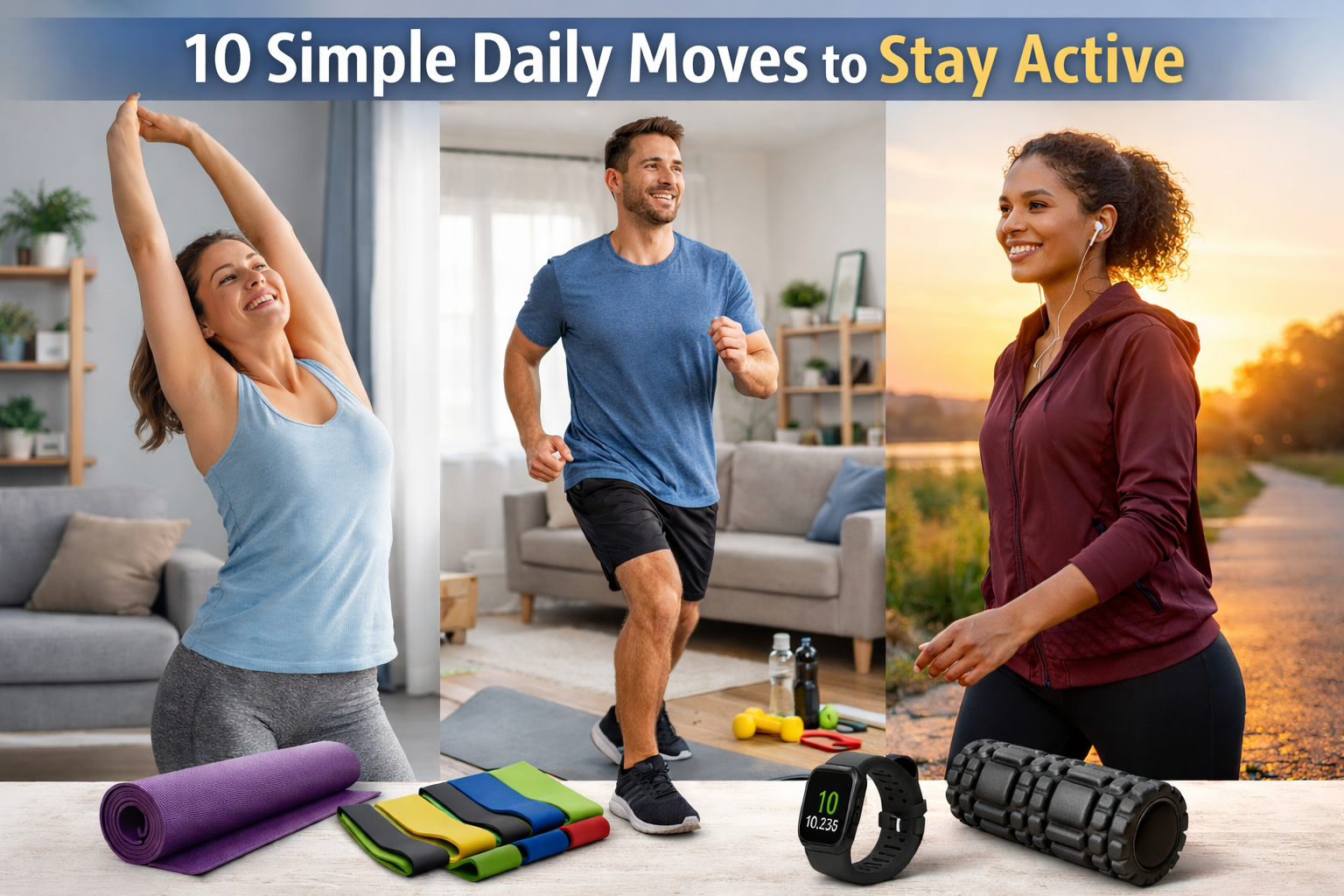
10 Simple Daily Moves to Stay Active and Healthy
Staying active doesn’t always require long workouts or gym sessions. At GlowFit, we focus on small, consistent movements that fit into everyday life. In this article, you’ll discover 10 simple daily moves that help you stay active, increase energy, and support your overall health.
In today’s world of long sitting hours and screen time, simple daily moves act like gentle reminders for your body to wake up, stretch, and move the way it was designed to. Let’s break down why these movements matter, how they work, and how you can easily fit them into your routine—starting today.
Why Simple Daily Moves Matter More Than You Think
Many people believe that health only comes from intense workouts. In reality, research shows that frequent movement throughout the day is just as important—if not more—than occasional high-intensity exercise.
Long periods of sitting are associated with higher risks of heart disease, diabetes, and muscle stiffness, even in people who work out regularly. Simple daily moves help interrupt inactivity and keep your metabolism, joints, and circulation functioning properly.
Source:
Centers for Disease Control and Prevention (CDC)
https://www.cdc.gov/physicalactivity/basics/pa-health
How Much Daily Movement Is Enough?
According to global health guidelines, adults should aim for at least 150 minutes of moderate physical activity per week. The good news? This can be broken into small chunks across the day.
Five minutes here, ten minutes there—it all counts. That’s where simple daily moves shine.
Source:
World Health Organization (WHO)
https://www.who.int/news-room/fact-sheets/detail/physical-activity
The Science Behind Simple Daily Moves
Simple daily moves:
- Improve blood circulation
- Support joint lubrication
- Maintain muscle strength
- Help regulate blood sugar
Even light activity activates enzymes that help break down fats and sugars in the bloodstream.
Movement stimulates endorphins, reduces stress hormones, and improves focus. A short walk or stretch can reset your mood faster than scrolling your phone.
Consistency builds identity. When movement becomes part of your day—not a task—you’re more likely to stick with it for life.
Source:
Harvard Health Publishing
https://www.health.harvard.edu/staying-healthy/the-importance-of-movement
How to Add Simple Daily Moves Without Changing Your Schedule
Micro-movements are short bouts of activity lasting from 30 seconds to 5 minutes. They’re easy, repeatable, and highly effective when done often.
Attach movement to habits you already have:
- Stretch after brushing your teeth
- Squat while waiting for coffee
- Walk during phone calls
This removes the need for motivation.
10 Simple Daily Moves to Stay Active
Start your day with gentle stretches for your neck, shoulders, hips, and back.
Improves flexibility, reduces stiffness, and prepares your body for movement.
Please choose display type!Source:
Harvard Health – Stretching Benefits
https://www.health.harvard.edu/staying-healthy/the-importance-of-stretching
Walking is one of the most accessible simple daily moves.
Walk with purpose, swing your arms, and maintain a steady pace—even for 10 minutes.
Please choose display type!
A fitness tracker helps monitor steps and active minutes.
Source:
CDC – Measuring Physical Activity
https://www.cdc.gov/physicalactivity/basics/measuring/index.html
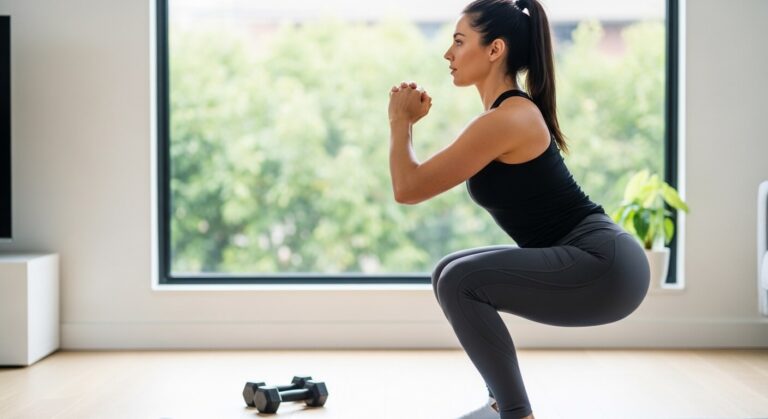
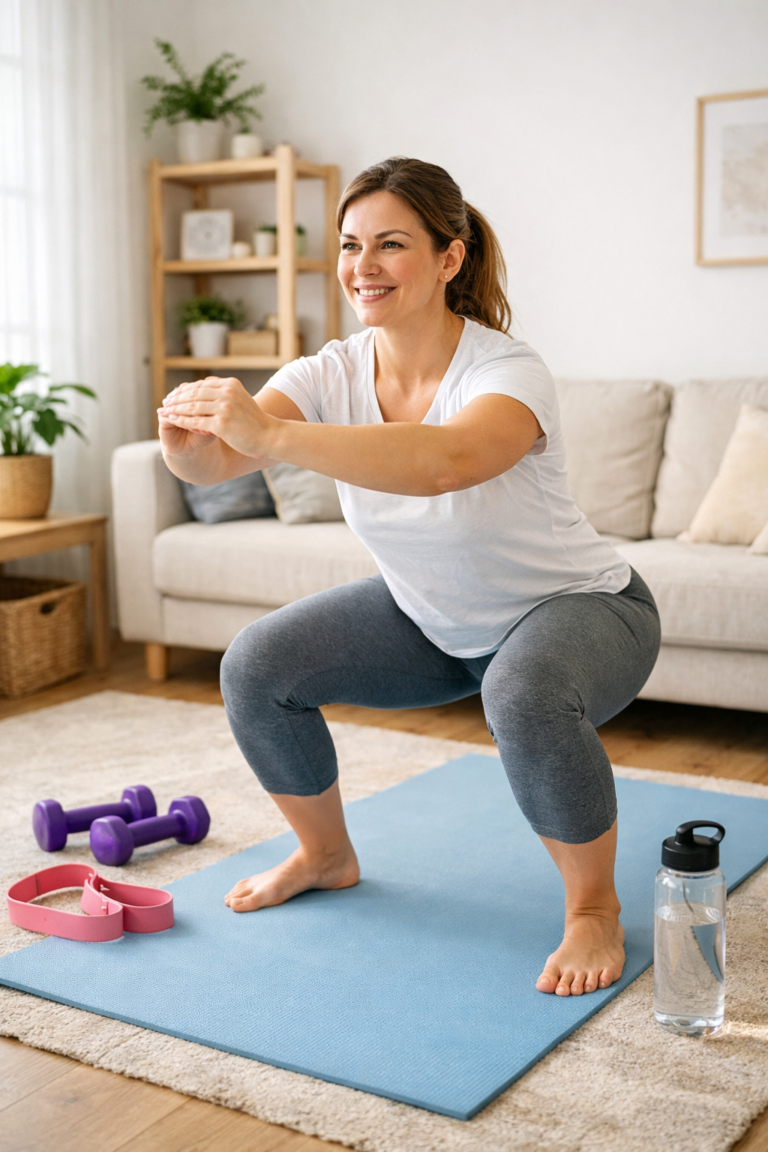
Squats mimic everyday actions like sitting and standing.
Glutes, quads, hamstrings, and core.
Resistance loop bands add light intensity without joint strain.
Please choose display type!Source:
American Council on Exercise (ACE)
https://www.acefitness.org
Alternate between sitting and standing throughout the day.
Engages stabilizing muscles and reduces lower-back tension.
Stairs turn daily routines into cardiovascular exercise.
Boosts heart rate and strengthens legs efficiently.
Source:
British Journal of Sports Medicine
https://bjsm.bmj.com
Push-ups against a desk or wall are joint-friendly and effective.
Chest, shoulders, arms, and core.
A thick exercise mat improves grip and comfort.
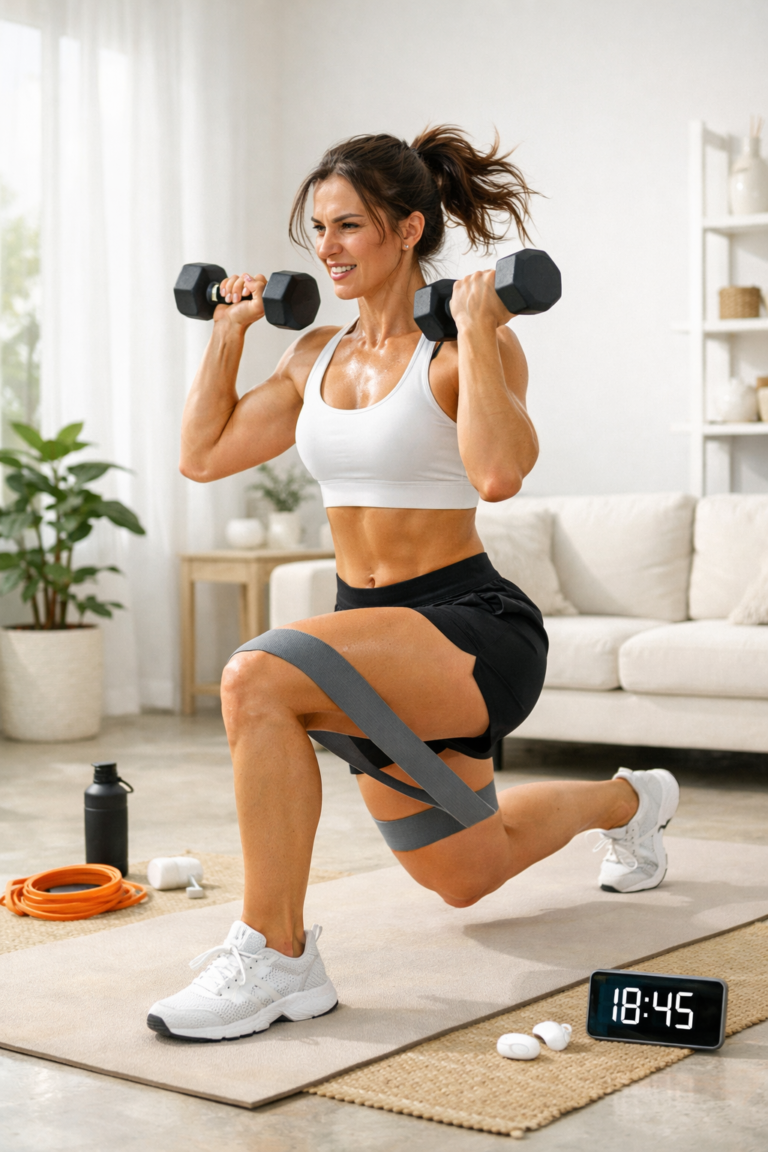
Please choose display type!Walking lunges improve strength and coordination.
Strengthens hips and improves joint control.
Tighten your core as if preparing for a cough.
Protects your spine during daily activities.
Rotate shoulders, hips, ankles, and wrists gently.
Keeps joints lubricated and reduces stiffness.
Source:
Cleveland Clinic – Mobility & Joint Health
https://health.clevelandclinic.org
A slow walk after dinner supports recovery.
Improves digestion and signals the body to relax.
A foam roller supports muscle relaxation afterward.
Please choose display type!Source:
Cleveland Clinic – Foam Rolling
https://health.clevelandclinic.org/foam-rolling/
Common Mistakes to Avoid
- Waiting for motivation instead of building habits
- Sitting for long, uninterrupted periods
- Doing too much too quickly
- Ignoring recovery and sleep
How to Stay Consistent Without Burnout
- Keep movements short and simple
- Focus on frequency, not intensity
- Choose movements you enjoy
- Track consistency, not perfection
Simple daily moves should feel supportive—not stressful.
Who Benefits Most From Simple Daily Moves
- Busy professionals
- Parents
- Beginners
- Older adults
- Anyone returning after inactivity
These moves are scalable, adaptable, and realistic for all fitness levels.
Conclusion
Health isn’t built in extremes—it’s built in moments. Simple daily moves are small investments that compound into stronger muscles, healthier joints, better mood, and more energy over time. Move often, move gently, and move consistently. Your body will thank you.
FAQs
Yes. Research shows frequent low-intensity movement significantly improves overall health.
No, but simple tools like resistance bands or a yoga mat can enhance results.
Short sessions spread throughout the day are enough.
Absolutely. These movements are beginner-friendly and adaptable.
They complement workouts and may be sufficient for general health when done consistently.
Reputable Sources
- World Health Organization (WHO)
https://www.who.int/news-room/fact-sheets/detail/physical-activity - Centers for Disease Control and Prevention (CDC)
https://www.cdc.gov/physicalactivity - Harvard Health Publishing
https://www.health.harvard.edu - Cleveland Clinic Health Library
https://health.clevelandclinic.org - American Council on Exercise (ACE)
https://www.acefitness.org
You may also enjoy our guide on Beginner’s Guide to Getting Fit at Home.
Read more about Healthy Living for Beginners.
4 Comments