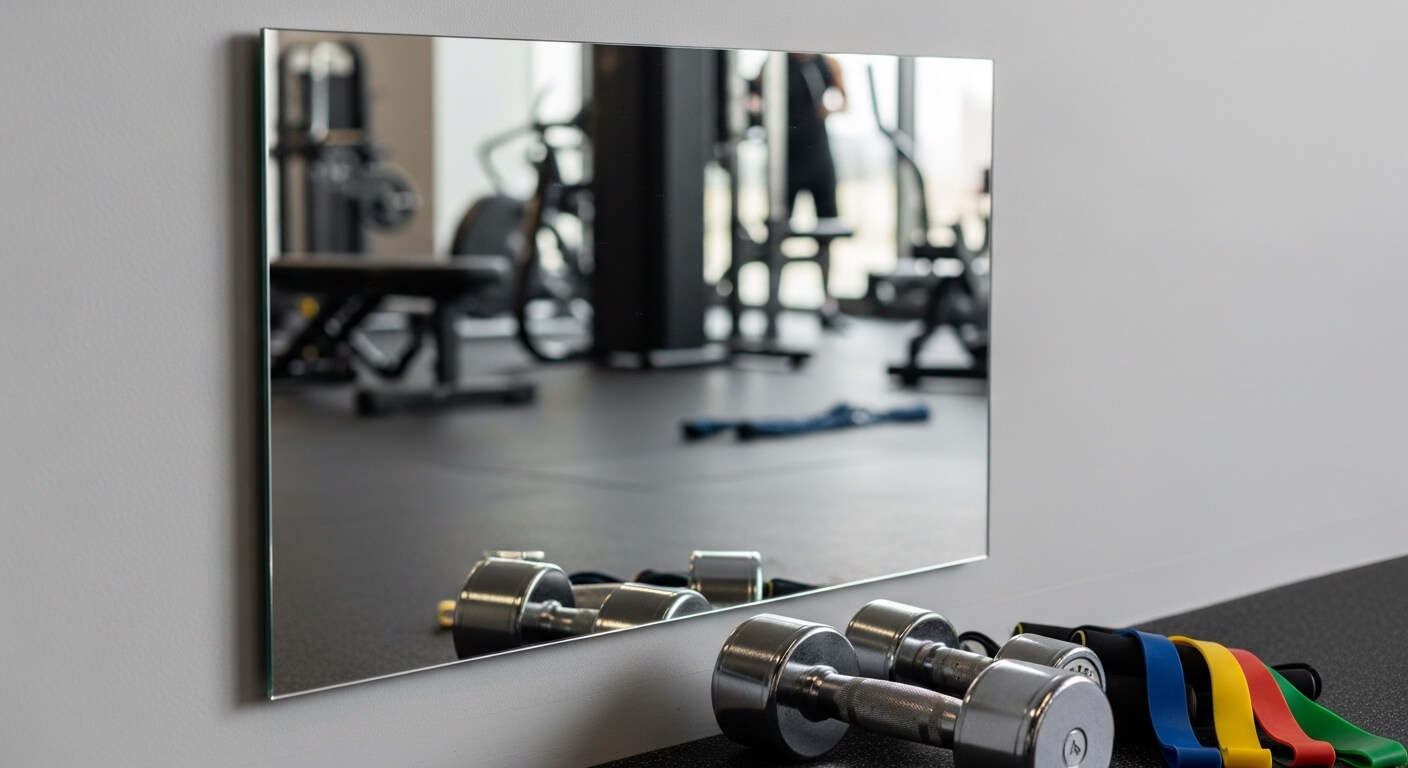
Complete Guide to Picking a Home Exercise Room Mirror: 7 Best & Powerful Tips
Table of Contents
Introduction: Why Your Home Exercise Room Mirror Matters More Than You Think
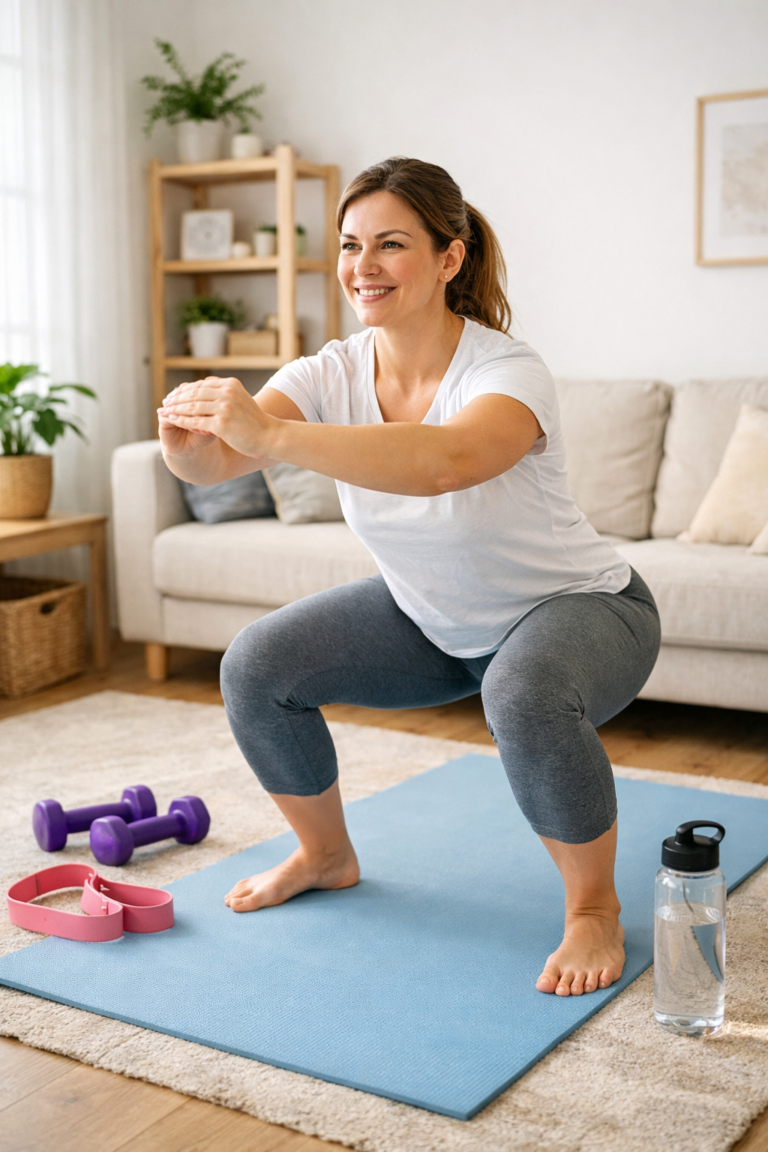
Have you ever tried doing a squat and wondered whether your form was even close to right — with no one to check and no mirror in sight? If you’re setting up a home gym, a home exercise room mirror isn’t just a nice-to-have. It’s one of the most important tools you can invest in.
Whether you’re a busy woman squeezing in a 20-minute workout before the kids wake up, a beginner trying to figure out the basics, or a seasoned fitness enthusiast leveling up your home gym — the right mirror changes everything. It helps you monitor your posture, stay motivated, make your space feel bigger and brighter, and honestly? It just makes working out feel more legit.
In this complete guide, we’re going to walk you through everything you need to know about choosing the best home exercise room mirror — from the different types and sizes to installation tips, safety considerations, and our top product recommendations. Let’s dive in!
1. Benefits of Having a Mirror in Your Home Exercise Room
Before we get into the how-to, let’s talk about why a home exercise room mirror is such a game-changer. Spoiler: it goes way beyond just checking out your gains.
1.1 Improve Your Form and Prevent Injuries
This is probably the biggest reason. Mirrors allow you to watch your body in real-time as you move. Are your knees caving in during lunges? Is your back rounding during deadlifts? A mirror lets you self-correct before bad form becomes a bad habit — or worse, an injury.
1.2 Stay Motivated During Workouts
There’s something about seeing yourself work hard that keeps you pushing. You can watch your muscles engage, track your sweat, and visually connect with your effort. It’s subtle, but it works. Many fitness enthusiasts say that mirrors actually make them train harder.
1.3 Make Your Space Feel Larger and Brighter
Home gyms can feel cramped, especially in a garage or spare bedroom. A large workout room mirror — or better yet, mirror walls for the gym — bounces light around the room and creates an illusion of space. Your tiny workout corner suddenly feels like a real studio.
1.4 Multi-Purpose Functionality
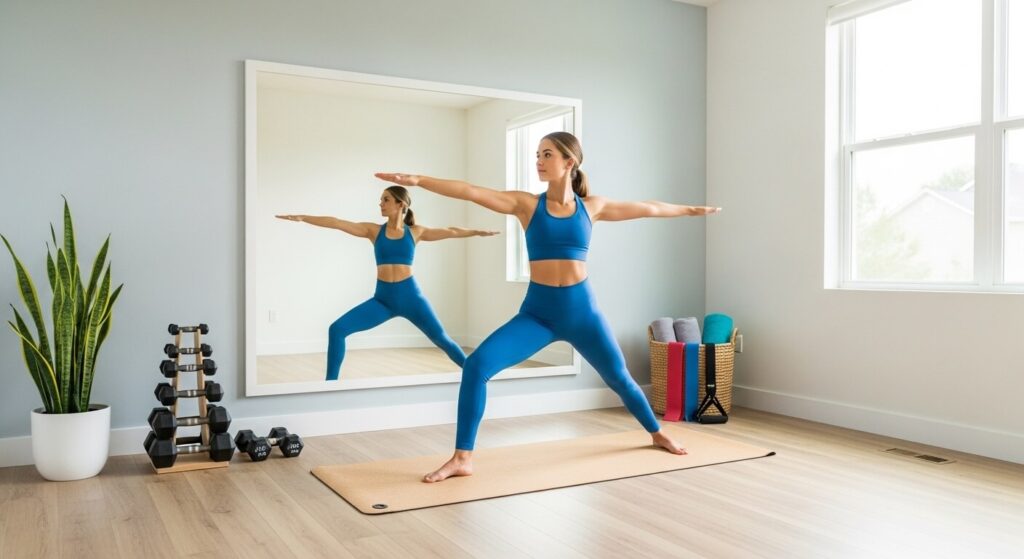
Your exercise room mirror doesn’t stop being useful when the workout ends. Use it for yoga, stretching, dance, or even just getting dressed. It’s one of the most versatile additions to any room.
2. Types of Home Exercise Room Mirrors to Consider
Not all mirrors are created equal — and the type you choose will depend on your space, budget, and how you work out. Here’s a breakdown of the most popular options:
2.1 Wall-Mounted Flat Mirrors
These are the classic gym-style mirrors. They’re mounted directly to the wall, providing a clean, polished look. Wall-mounted exercise room mirrors are ideal if you have a dedicated space and want something permanent and stable.
- Best for: dedicated home gyms, larger rooms
- Pros: Secure, space-saving, professional look
- Cons: Requires drilling, harder to move
2.2 Full-Length Frameless Mirrors
Frameless mirrors give your space a modern, seamless appearance. They’re often used to create mirror walls for a gym look. You can line up multiple panels side by side for a nearly wall-to-wall mirror effect.
- Best for: modern aesthetics, yoga or dance spaces
- Pros: Sleek design, versatile sizing
- Cons: Can feel fragile if not properly secured
2.3 Leaning or Floor Mirrors
Don’t want to drill holes? A leaning mirror is your best friend. These simply rest against the wall and can be moved wherever you need them. While they’re less stable than mounted options, they’re great for renters or those who change their layout often.
- Best for: renters, flexible layouts
- Pros: No installation required, portable
- Cons: Less stable, can tip if knocked
2.4 Acrylic Safety Mirrors
Made from shatterproof acrylic rather than glass, these are perfect for households with kids or high-activity areas. They’re lighter than glass mirrors and significantly safer if something goes wrong.
- Best for: families, garage gyms
- Pros: Shatterproof, lightweight
- Cons: Slight image distortion, less clarity than glass
2.5 LED Backlit Mirrors
Want your home gym to look straight out of a luxury fitness studio? LED backlit mirrors add both function and flair. They provide even lighting — ideal for rooms that don’t get much natural light — and look absolutely stunning.
- Best for: basement gyms, rooms with low lighting
- Pros: Built-in lighting, stylish
- Cons: More expensive, requires power outlet
3. Quick Comparison: Which Home Exercise Room Mirror Type Is Right for You?
| Mirror Type | Best For | Approx. Price | Installation |
| Wall-Mounted Flat | All-around use | $50–$300 | Medium |
| Frameless Full-Length | Small spaces | $40–$200 | Easy |
| Leaning/Floor Mirror | Renters, flexibility | $60–$250 | Very Easy |
| Acrylic Safety Mirror | Families with kids | $30–$180 | Easy |
| LED Backlit Mirror | Low-light rooms | $100–$500 | Medium |
4. How to Choose the Right Size Mirror for Your Workout Room
Size really matters when it comes to your home exercise room mirror — and bigger is almost always better. Here’s a simple framework:
4.1 For Full-Body Visibility
You’ll want a mirror that’s at least as tall as you are — ideally taller. A standard full-length mirror runs about 60 to 68 inches tall, but for a proper workout mirror, aim for 72 inches (6 feet) or more. Mount it so the bottom edge sits about 12 inches off the floor.
4.2 For Small Rooms
In smaller spaces, go vertical. A tall, narrow mirror gives you enough feedback without overwhelming the room. Alternatively, a frameless acrylic panel mounted at mid-wall can be surprisingly effective.
4.3 For Mirror Walls (Full Studio Look)
If you want true mirror walls for your gym, aim to cover at least 50–75% of one wall. Use multiple panels placed side by side. Measure your wall carefully, and leave a few inches of clearance on each side.
4.4 Height Mounting Tips
- Bottom edge: 12–18 inches from the floor
- Top edge: At least 6–7 feet high for full body view
- Tilt: Slightly forward (1–2 degrees) improves the reflection angle
5. Safety Tips for Installing Your Exercise Room Mirror
Before you hang anything, safety first. Glass mirrors are heavy and fragile — a poorly installed mirror in a high-activity room is a real hazard.
5.1 Use Proper Wall Anchors
Always anchor into studs when possible. If that’s not an option, use heavy-duty wall anchors rated for the weight of your mirror. Most glass mirrors weigh between 20–50 lbs depending on size.
5.2 Apply Mirror Safety Backing Film
This is a thin adhesive film applied to the back of the mirror. If it shatters, the film holds the shards in place. It’s an inexpensive safety upgrade that can prevent serious injuries.
5.3 Consider Tempered Glass or Acrylic
If safety is a top priority — especially with kids or pets — choose tempered glass or acrylic mirrors from the start. Tempered glass is heat-treated to shatter into small, less dangerous pieces. Acrylic doesn’t shatter at all.
5.4 Keep Space Around the Mirror
Make sure your workout space has at least 3–4 feet of clearance in front of the mirror. You don’t want to punch, kick, or stumble into it mid-workout.
6. Top 5 Home Exercise Room Mirror Recommendations
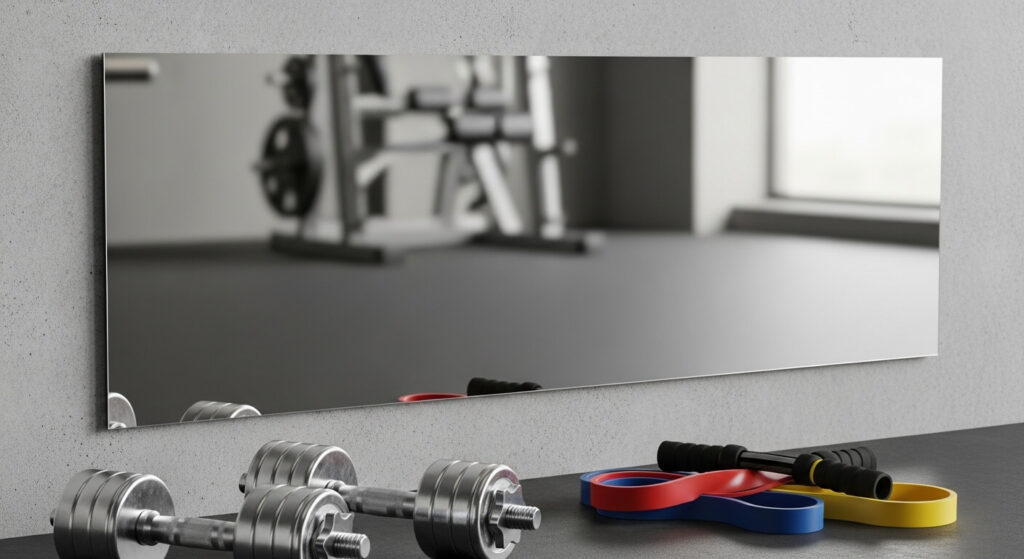
Here are our top picks for the best exercise room mirrors on the market right now. We’ve selected them based on quality, value, and fit for different types of home gym setups.
6.1 Fab Glass and Mirror — Full-Length Frameless Wall Mirror
- Description: A premium, wall-mounted glass mirror with polished edges and a clean frameless design.
- Key Benefits: Crystal-clear reflection, available in multiple sizes up to 96 inches, easy-mount hardware included.
- Best For: Home gym owners who want a professional studio look at a reasonable price.
6.2 Clearly Basics Wall Mirror Panels (Acrylic)
- Description: Lightweight, shatterproof acrylic mirror panels that mimic the look of glass at a fraction of the weight.
- Key Benefits: Safe for families, easy DIY installation with included adhesive strips, flexible sizing.
- Best For: Parents, renters, or anyone installing a mirror without professional help.
6.3 NeuType Full-Length Floor Mirror (Leaning)
- Description: A tall, stylish leaning mirror with a thin black frame — perfect for the aesthetic-conscious home gym.
- Key Benefits: No installation needed, contemporary look, affordable price point.
- Best For: Renters, beginners setting up their first home workout space.
6.4 MIRROROUTLET Gym Mirror — Large Beveled Glass Panel
- Description: Heavy-duty beveled glass panels designed specifically for gym environments.
- Key Benefits: Commercial-grade quality, distortion-free reflection, robust mounting system.
- Best For: Serious fitness enthusiasts who want the closest thing to a real gym mirror at home.
6.5 Keonjinn LED Backlit Bathroom & Gym Mirror
- Description: A sleek LED-lit mirror that provides even, flattering lighting for any workout space.
- Key Benefits: Adjustable brightness, anti-fog function, modern design, doubles as a regular room mirror.
- Best For: Basement gyms or rooms with poor natural lighting.
7. Installation Guide: How to Mount Your Home Exercise Room Mirror
Ready to hang your new mirror? Follow these steps for a safe and clean installation:
7.1 Tools You’ll Need
- Stud finder
- Level
- Drill + appropriate bits
- Heavy-duty wall anchors or mirror clips
- Measuring tape
- A helper (mirrors are awkward to hold alone!)
7.2 Step-by-Step Process
Step 1: Measure your wall and decide the exact placement. Mark the corners lightly with a pencil.
Step 2: Use a stud finder to locate wall studs. Mark them.
Step 3: For heavy mirrors, always anchor into studs. For lighter mirrors or acrylic panels, heavy-duty adhesive strips or anchors work fine.
Step 4: Use a level to ensure the mounting hardware is straight before drilling.
Step 5: Hang the mirror carefully with a helper. Check the level again once it’s up.
Step 6: Apply safety backing film if you haven’t already. Done!
8. More Resources to Level Up Your Home Gym
Looking to build out the rest of your workout space? Check out these helpful guides from our site:
→ Home Gym Equipment Workout – 9 Proven & Powerful Essentials for Fast Results
→ Best Adjustable Dumbbells Review 2026: The Ultimate Home Gym Upgrade
→ Home Workouts for Busy Women: 20-Minute Full-Body Routines That Work
→ Glute Workouts at Home – 10 Proven & Powerful Exercises for a Toned Booty
9. Expert Sources & Further Reading
→ ACE Fitness – How to Set Up a Home Gym
→ Healthline – Benefits of Exercising at Home
→ NASM – Proper Exercise Form & Technique
Conclusion: Invest in the Right Home Exercise Room Mirror
Choosing the right home exercise room mirror isn’t just about decoration — it’s about creating a space that supports your fitness journey from day one. Whether you’re a beginner trying to nail your form or a seasoned athlete wanting to monitor every rep, the right mirror is one of the smartest additions to any home gym.
Here’s the quick recap: decide on the type (wall-mounted, frameless, acrylic, or LED), pick a size that gives you full-body visibility, install it safely, and don’t skip the safety backing film. Start with one large mirror or a set of panels, and build from there.
Your home exercise room mirror will be one of those investments you wonder how you ever lived without. So go ahead — reflect on it (pun intended) and make it happen!
Frequently Asked Questions (FAQs)
FAQ 1: What size mirror is best for a home exercise room?
For most home workouts, you’ll want a mirror that’s at least 48 inches wide and 72 inches (6 feet) tall. This gives you a full-body view, which is essential for checking your form during exercises like squats, lunges, or deadlifts. If budget and space allow, going bigger — such as mirror walls for the gym — is always better.
FAQ 2: Are acrylic mirrors good for home gyms?
Yes! Acrylic mirrors are an excellent choice for home gyms, especially in households with children or high activity levels. They’re shatterproof, lightweight, and much safer than traditional glass. The trade-off is a very slight reduction in image clarity, but for most workout purposes, the difference is negligible.
FAQ 3: How do I keep my exercise room mirrors from fogging up?
Fog can be an issue in enclosed spaces or after intense workouts. A few solutions: ensure proper ventilation in your workout room (a small fan helps), apply an anti-fog spray or treatment to the mirror surface, or invest in an LED mirror with a built-in anti-fog heating function.
FAQ 4: Can I use peel-and-stick mirror tiles for my home gym?
You can, but with caution. Peel-and-stick mirror tiles are budget-friendly and easy to install, but the seams between tiles can be distracting, and the adhesive can lose grip over time. They tend to work better for smaller, accent mirrors rather than for a full workout room mirror setup. For a more permanent, seamless solution, frameless glass panels are the better investment.
FAQ 5: How far should I stand from the mirror when working out?
A good rule of thumb is to stand at least 3–4 feet from your home exercise room mirror. This gives you a full-body view without standing too close and distorting your perspective. For exercises like yoga flows or dance cardio, you may want 5–6 feet of clearance to see your whole body comfortably.

One Comment