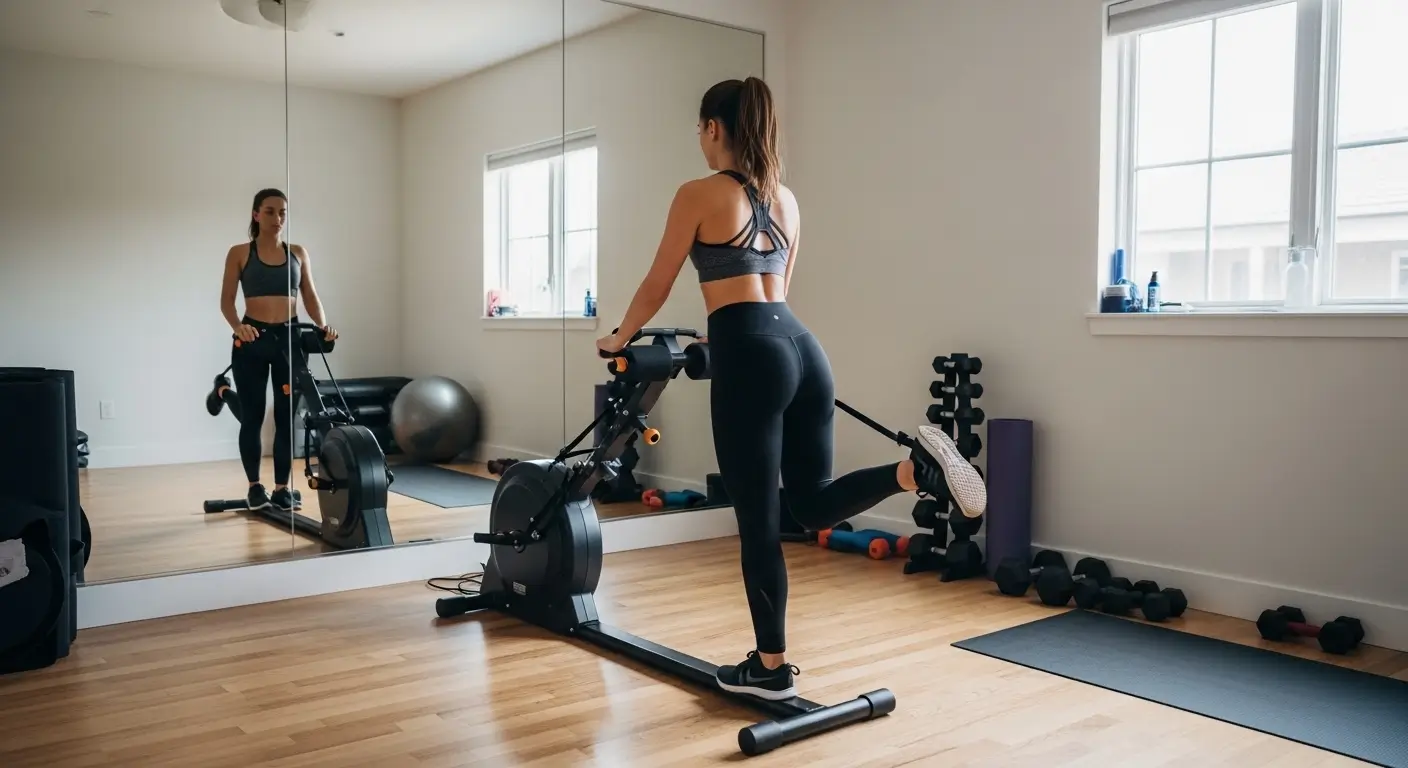
Best Hamstring Workouts for Stronger Legs and Glutes: 10 Proven & Powerful Exercises
Table of Contents
Introduction
Have you ever finished a leg day workout and felt like your hamstrings were completely left out? You’re not alone. The hamstrings are one of the most undertrained muscle groups — especially for women — and yet they play a massive role in how strong, toned, and injury-proof your legs and glutes actually are.
Whether you’re a complete beginner, a busy mom squeezing in a 20-minute session at home, or someone who just wants to finally understand what the best hamstring workouts look like, you’re in the right place.
In this guide, we’ll break down the top 10 best hamstring workouts — from no-equipment floor moves to gym-based lifts — explain exactly why your hamstrings matter, and help you build a routine that actually delivers results. Let’s get into it.
What Are the Hamstrings and Why Should You Train Them?
Your hamstrings are a group of three muscles running along the back of your thigh: the biceps femoris, semitendinosus, and semimembranosus. They work together to bend your knee, extend your hip, and power almost every movement you do — from climbing stairs to sprinting.
Here’s the problem: most people sit for hours every day. That shortens and weakens the hamstrings, leading to tight hips, lower back pain, and a flat, underdeveloped backside. Sound familiar?
Training your hamstrings regularly helps you:
- Build rounder, fuller glutes
- Prevent knee and lower back injuries
- Improve posture and athletic performance
- Boost overall leg strength and balance
And the best part? You don’t need a fancy gym to do it.
How to Get the Most Out of the Best Hamstring Workouts
Before we dive into the exercises, let’s talk strategy. The hamstrings respond best to a mix of heavy, slow movements and controlled bodyweight exercises. Think of it like baking — rushing the process never gives you the best results.
Here are a few quick tips:
- Slow down the eccentric (lowering) phase of every rep — this is where real hamstring growth happens.
- Aim for 3–4 sets of 10–15 reps per exercise for beginners.
- Rest 60–90 seconds between sets.
- Train hamstrings 2–3 times per week for noticeable results.
Now, let’s get into the actual exercises.
10 Best Hamstring Workouts for Women
1. Romanian Deadlift (RDL)
The Romanian deadlift is arguably the king of hamstring exercises. It stretches the hamstrings under load, creating massive muscle activation from hip to knee.
How to do it:
- Stand with feet hip-width apart, holding dumbbells in front of your thighs.
- Hinge at the hips, pushing them back as you lower the weights along your shins.
- Feel a deep stretch in your hamstrings, then drive your hips forward to return to standing.
- Keep your back flat throughout — no rounding!
Why it works: The RDL targets the entire hamstring from origin to insertion and also fires up the glutes. It’s a foundational move in any best hamstring workouts program.
Beginner tip: Start with light dumbbells or even no weight. Focus on the hip hinge pattern before loading up.
2. Nordic Hamstring Curl
Don’t let this one fool you — the Nordic curl is brutally effective. Studies show it’s one of the highest hamstring-activating exercises you can do, and it requires zero equipment.
How to do it:
- Kneel on a soft surface and anchor your feet under a couch or have a partner hold them.
- With arms crossed at your chest, slowly lower your torso toward the floor.
- Use your hamstrings to control the descent as long as possible.
- Place hands on the floor to catch yourself, then push back up.
Why it works: The eccentric loading in this movement is incredibly powerful for building hamstring strength and resilience.
3. Glute Bridge with Hamstring Focus
The glute bridge is a go-to for good reason, but with one small tweak — placing your feet further from your body — you shift the emphasis toward your hamstrings.
How to do it:
- Lie on your back with knees bent, feet flat on the floor (slightly further out than usual).
- Press through your heels to lift your hips toward the ceiling.
- Squeeze your glutes and hamstrings at the top for 2 seconds.
- Lower slowly and repeat.
This is a perfect beginner-friendly exercise that can be done anywhere — on a yoga mat, in your living room, or in front of your home exercise room mirror to check your form.
4. Single-Leg Deadlift
Balance, strength, and coordination — this move has it all. The single-leg deadlift is one of the best hamstring workouts for targeting each leg individually and correcting muscle imbalances.
How to do it:
- Stand on one leg, holding a dumbbell in the opposite hand.
- Hinge forward, extending the free leg behind you as a counterbalance.
- Lower the weight toward the floor while keeping your back flat.
- Return to standing and repeat.
Pro tip: Go slow and use a wall or mirror for balance when starting out. A workout room mirror is great here to check alignment.
5. Stability Ball Hamstring Curl
No gym machines? No problem. A stability ball turns your living room floor into a hamstring training station.
How to do it:
- Lie on your back and place your heels on top of the stability ball.
- Lift your hips into a bridge position.
- Curl the ball toward your glutes by bending your knees.
- Slowly extend back out and repeat.
Why it works: This move challenges your hamstrings through both hip extension and knee flexion — a rare double-action most exercises don’t offer.
6. Sumo Squat with Hamstring Bias
Yes, squats are typically a quad exercise — but the sumo squat, done with proper form and a wide stance, recruits your inner hamstrings and glutes beautifully.
How to do it:
- Stand with feet wider than shoulder-width, toes pointed outward.
- Sit back and down, keeping your chest tall and knees tracking over toes.
- Drive through your heels to return to standing.
Pair this with a glute workout at home for a seriously powerful lower-body session.
7. Donkey Kicks
Simple. Effective. Perfect for busy women who need a no-equipment hamstring and glute finisher.
How to do it:
- Start on all fours, hands under shoulders, knees under hips.
- Keeping the knee bent at 90 degrees, kick one heel up toward the ceiling.
- Squeeze at the top and lower slowly.
- Repeat for 12–15 reps before switching sides.
8. Lying Leg Curl (Machine or Band)
If you have access to a leg curl machine at the gym, use it. If you’re at home, a resistance band looped around a door anchor works just as well.
How to do it (band version):
- Lie face down on the floor with a band looped around your ankles.
- Curl both heels toward your glutes against the band resistance.
- Slowly lower and repeat.
This is one of the few exercises that isolates the hamstrings in pure knee flexion — making it an excellent addition to any best hamstring workouts plan.
9. Good Mornings
This old-school move is back in fashion — and for good reason. Good mornings build incredible hamstring and lower back strength with just a barbell or even a resistance band across your shoulders.
How to do it:
- Stand with a bar across your upper back (or hold a band under your feet and over your shoulders).
- With a slight knee bend, hinge forward at the hips until your torso is nearly parallel to the floor.
- Drive your hips forward to stand back up.
Caution: Keep this movement light and controlled at first. Focus on form before loading weight.
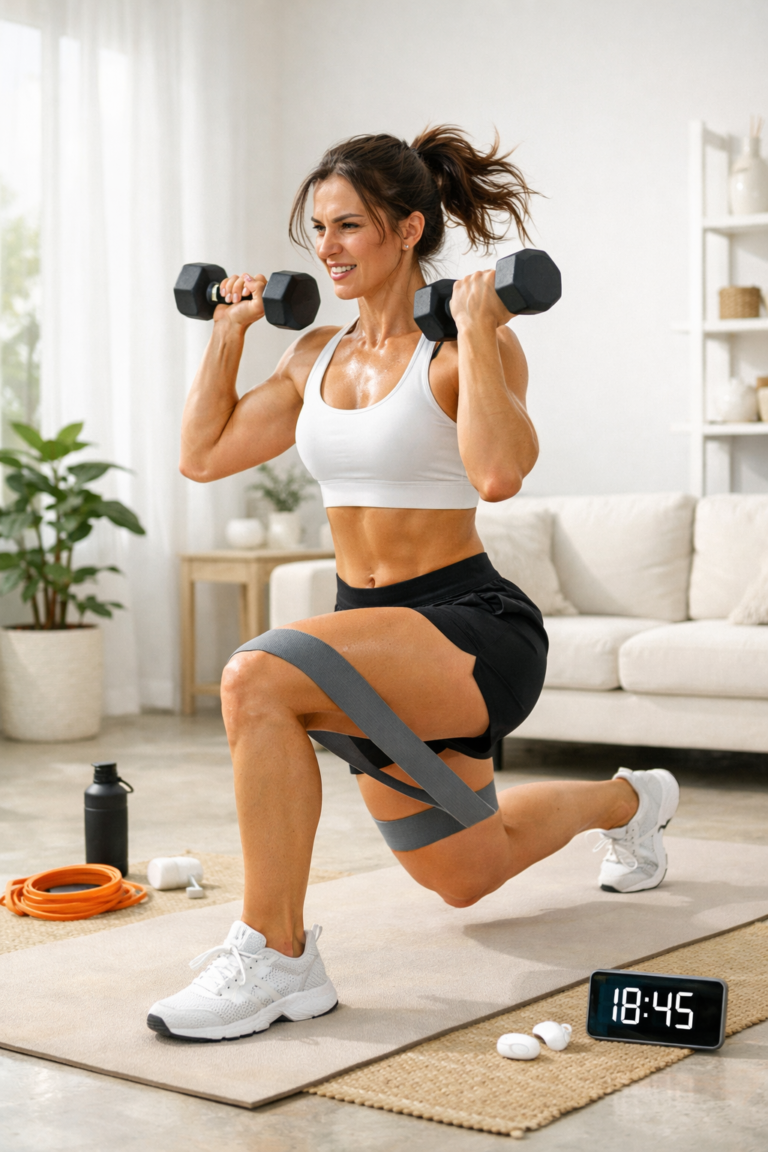
10. Reverse Lunge with Hamstring Emphasis
The reverse lunge is gentler on the knees than a forward lunge and places more demand on the hamstrings and glutes of the front leg.
How to do it:
- Stand tall, hands on hips or holding light dumbbells.
- Step one foot back and lower your back knee toward the floor.
- Focus on sinking down rather than forward.
- Push through the front heel to return to standing.
Sample Weekly Best Hamstring Workouts Routine
Here’s a simple 3-day split to get you started:
| Day | Focus | Exercises |
|---|---|---|
| Monday | Hamstring Strength | RDL, Nordic Curl, Glute Bridge |
| Wednesday | Stability & Balance | Single-Leg Deadlift, Stability Ball Curl, Donkey Kicks |
| Friday | Full Lower Body | Sumo Squat, Good Mornings, Reverse Lunge, Leg Curl |
Feel free to adapt this to your schedule. Even two sessions per week will produce visible results within 4–6 weeks.
Common Mistakes to Avoid in Hamstring Training
Even the best hamstring workouts won’t help if you’re making these classic errors:
- Skipping the warm-up. Cold hamstrings are tight hamstrings — always spend 5 minutes warming up with leg swings and hip circles.
- Using too much weight too soon. Hamstrings are powerful but fragile under poor form. Build up gradually.
- Neglecting the eccentric phase. Rushing through the lowering portion of every rep is the #1 mistake beginners make.
- Only training once a week. One session doesn’t give your hamstrings enough stimulus to grow. Aim for two to three.
Do You Need Equipment for the Best Hamstring Workouts?
Absolutely not. Several of the exercises in this guide — Nordic curls, glute bridges, donkey kicks, reverse lunges — require zero equipment and can be done right in your living room.
That said, adding a pair of adjustable dumbbells or a resistance band dramatically expands your options. For a complete home gym setup recommendation, check out our guide on Best Adjustable Dumbbells Review 2026: The Ultimate Home Gym Upgrade.
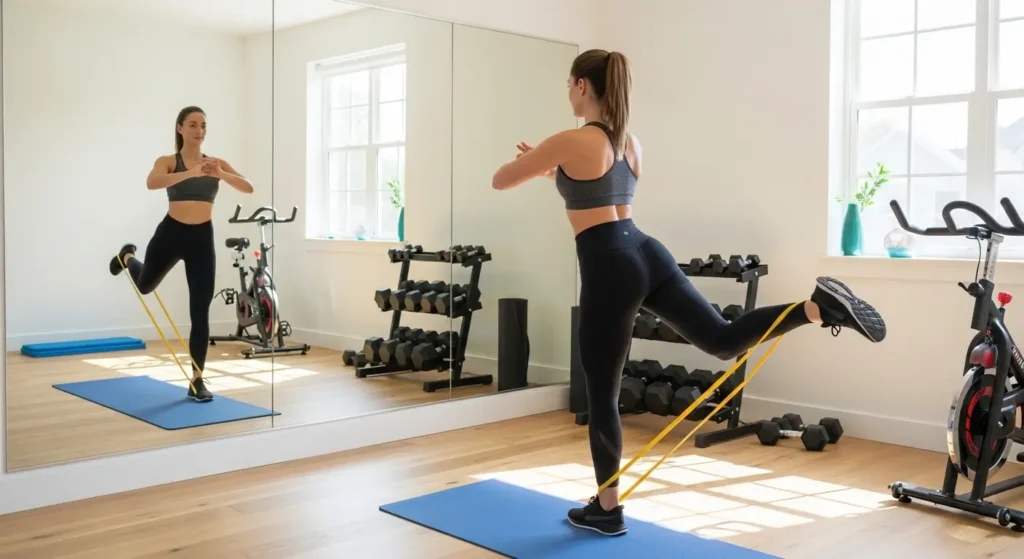
If you’re building out a dedicated training space, don’t underestimate the value of a wall mirror. Watching your form in real time is one of the fastest ways to improve technique and prevent injury. A quality exercise room mirror turns any spare room into a proper training environment.
Best Home Gym Products for Your Hamstring Workouts
Want to take your training to the next level? Here are five products that pair perfectly with the best hamstring workouts listed above.
1. Resistance Band Set (Heavy Duty Loop Bands)
Description: A set of 5 loop bands ranging from light to extra-heavy resistance, perfect for glute bridges, leg curls, and warm-up activation drills.
Key Benefits:
- Portable and lightweight — train anywhere
- Progressive resistance for all fitness levels
- Doubles as a stretching tool post-workout
Best for: Beginners and home trainers who want a budget-friendly hamstring training tool.
2. Adjustable Dumbbells
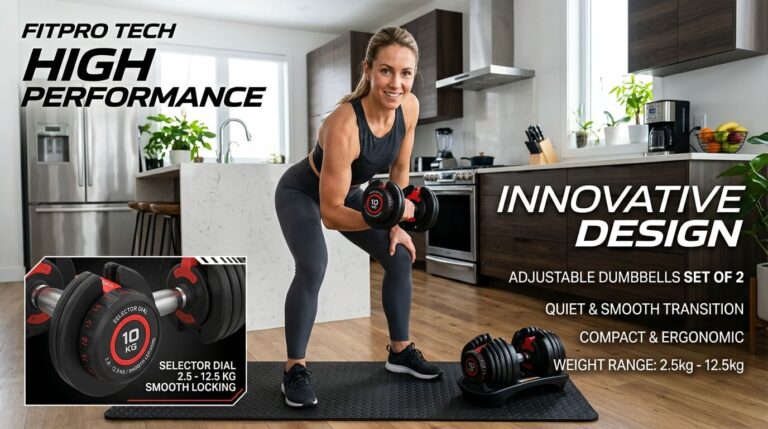
Description: Space-saving dumbbells that adjust from 5 to 52.5 lbs with a simple dial mechanism — ideal for Romanian deadlifts, single-leg deadlifts, and reverse lunges.
Key Benefits:
- Replaces an entire dumbbell rack
- Fast weight changes between sets
- Durable and compact design
Best for: Women who want to progress in their training without cluttering their home gym. See our Best Adjustable Dumbbells Review 2026 for our top picks.
3. Stability Ball (55–65cm)
Description: A standard anti-burst exercise ball that enables stability ball hamstring curls, core work, and stretching routines.
Key Benefits:
- Engages stabilizer muscles during every exercise
- Inexpensive and versatile
- Works for both workouts and desk use
Best for: Home gym users who want to add an element of instability training to their routine.
4. Workout Room Mirror (Wall-Mounted)
Description: A large, frameless floor-to-ceiling mirror designed specifically for home gyms. Seeing your form during every rep is a game-changer.
Key Benefits:
- Instant form feedback for complex movements like RDLs and Nordic curls
- Makes small spaces feel larger and more energizing
- Motivates you to train harder
Best for: Anyone building a dedicated home exercise space. Check our Complete Guide to Picking a Home Exercise Room Mirror for sizing and placement tips.
5. Yoga Mat (Extra Thick, 6mm+)
Description: A thick, non-slip mat that cushions your knees for Nordic curls, donkey kicks, and floor-based exercises.
Key Benefits:
- Joint protection during bodyweight work
- Non-slip surface keeps you stable
- Easy to clean and store
Best for: Beginners and anyone doing floor-based hamstring work regularly.
Nutrition Tips to Support Your Hamstring Workouts
Training hard is only half the equation. What you eat matters just as much.
- Protein: Aim for 0.7–1g per pound of bodyweight per day to support muscle repair and growth. Good sources include eggs, chicken, Greek yogurt, and lentils.
- Carbohydrates: Don’t fear carbs — they fuel your workouts. Oats, sweet potatoes, and rice are excellent choices.
- Hydration: Dehydrated muscles cramp and fatigue faster. Drink at least 8 glasses of water daily, more on training days.
For women specifically, hormonal cycles can affect strength and recovery. Learn how to train smarter across your cycle in our guide: Women Hormones and Fitness: How to Train Smarter for Better Results.
External Resources for Hamstring Training
Want to go deeper? Here are some trusted external sources:
- ACE Fitness – Hamstring Anatomy and Exercise Guide — Great breakdown of hamstring biomechanics for beginners.
- PubMed – Nordic Hamstring Curl Research — Peer-reviewed studies confirming the effectiveness of the Nordic curl for injury prevention.
- NSCA – Strength Training Guidelines — The national standard for evidence-based strength programming.
How to Stay Consistent With Your Hamstring Workouts
Results come from consistency, not perfection. Here’s how to make hamstring training a lasting habit:
- Schedule it. Put your workouts in your calendar like an appointment.
- Start small. Two sessions per week is better than an intense 5-day plan you abandon in two weeks.
- Track progress. Noting your weights and reps helps you see how far you’ve come.
- Find your “why.” Whether it’s stronger legs, less back pain, or a rounder backside — keep that goal front and center.
Need more motivation? Dive into our full guide: How to Stay Consistent With Workouts: 10 Strategies for Lasting Results.
Conclusion
The best hamstring workouts don’t have to be complicated — they just have to be done consistently. From Romanian deadlifts to Nordic curls and glute bridges, the exercises in this guide cover every angle of hamstring training, whether you’re a total beginner or a seasoned fitness lover.
Start with two or three exercises from this list, focus on perfect form, and gradually add more volume over time. Your legs, glutes, and lower back will thank you for it.
And remember: a well-equipped home gym — even just a resistance band, a pair of dumbbells, and a workout room mirror — makes it so much easier to stay consistent and train with confidence.
Now get moving. Your stronger, more powerful legs are waiting.
Frequently Asked Questions (FAQs)
1. How often should I do hamstring workouts? For most women, training hamstrings 2–3 times per week provides the right balance of stimulus and recovery. Give muscles at least 48 hours to recover between sessions.
2. Can I do the best hamstring workouts at home without any equipment? Absolutely. Nordic curls, glute bridges, donkey kicks, and reverse lunges are all highly effective and require nothing but your bodyweight and a mat. For added challenge, a resistance band makes a big difference.
3. Why do my hamstrings always feel tight, even when I stretch? Chronic tightness in the hamstrings is often a sign of weakness, not just inflexibility. Strengthening them through exercises like RDLs and good mornings can actually relieve that persistent tightness over time.
4. Are hamstring exercises good for weight loss? Yes — large compound movements like Romanian deadlifts and sumo squats burn significant calories and build lean muscle, which boosts your metabolism long-term. For more fat-burning ideas, check out Best Fat-Burning Workouts You Can Do Anywhere.
5. How long before I see results from hamstring training? Most beginners notice improved strength and some visual changes within 4–6 weeks of consistent training. Full aesthetic changes typically take 8–12 weeks. Patience and consistency are everything.
Looking for more powerful home workouts? Check out Home Workouts for Busy Women: 20-Minute Full-Body Routines That Work and Glute Workouts at Home – 10 Proven & Powerful Exercises for a Toned Booty.

roaccutane