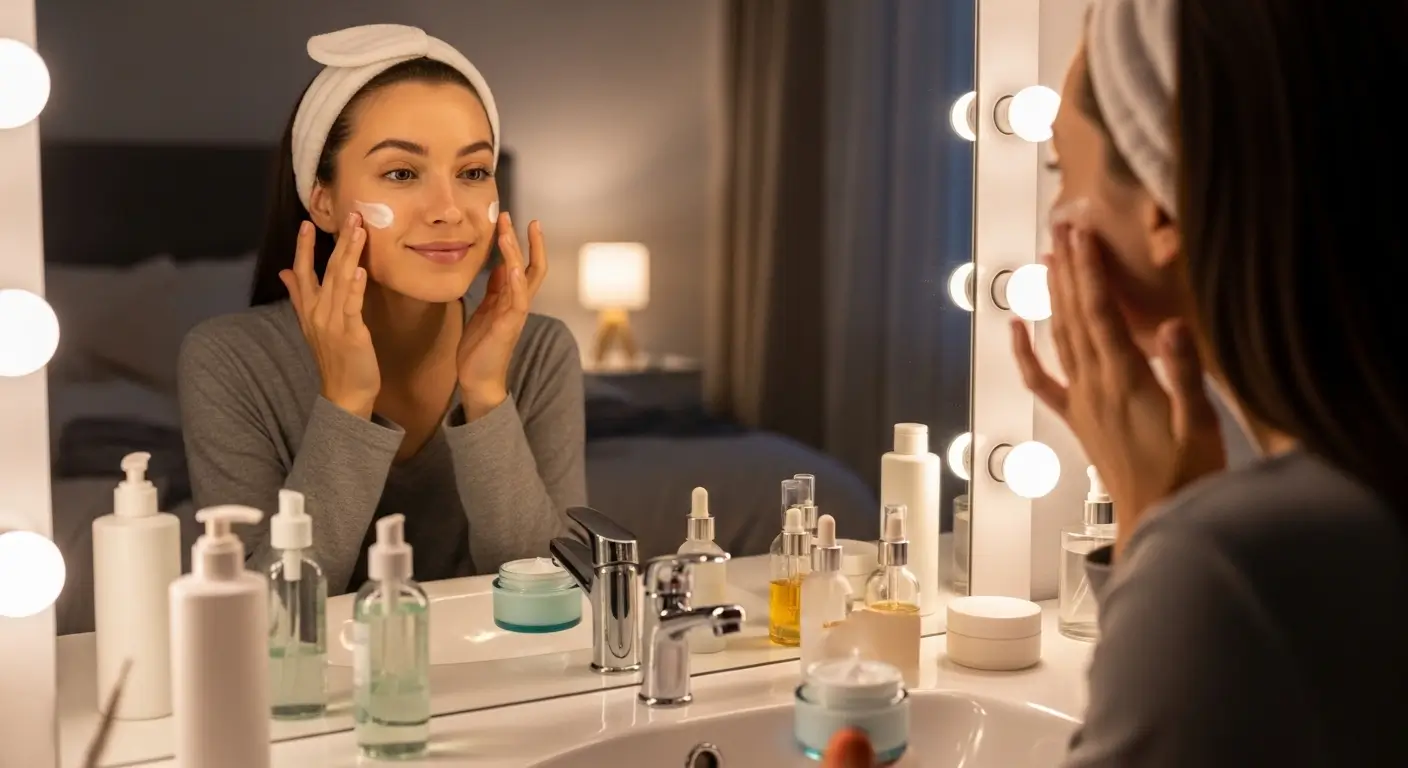
Night Skin Routine: The Correct Skincare Order Before Bed — 7 Easy, Proven Steps
Cruelty free cosmetics have come a long way, and today, building a powerful night skin routine has never been more accessible — or more exciting. Whether you’re a total beginner, a busy working woman barely managing five minutes before bed, or a fitness enthusiast who sweats through the day and wants to wake up with healthy, glowing skin, a solid nighttime skincare routine is one of the best investments you can make. It costs you less than 10 minutes, it works while you sleep, and the results? Genuinely transformational. Think of it like charging your phone overnight — you wake up to full battery, ready to face the world. Your skin works exactly the same way, and tonight is the perfect time to start giving it the charge it deserves.
Table of Contents
Why Your Night Skin Routine Matters More Than You Think
Let’s be honest for a second. How many nights have you collapsed into bed with your makeup still on, telling yourself you’ll do better tomorrow? We’ve all been there. But here’s what’s actually happening beneath the surface while you skip that night face routine: your skin is trapped under a layer of pollution particles, SPF residue, makeup pigment, and the oxidative stress your face absorbed all day. None of that is doing your complexion any favors. The science is clear — skipping your nightly face care routine leads to dullness, breakouts, accelerated aging, and a weakened skin barrier. The good news is that fixing this doesn’t require 15 steps or a $500 product haul. You just need the right steps in the right order.
What Actually Happens to Your Skin While You Sleep
Between roughly 10 p.m. and 2 a.m., your skin goes into full repair mode — blood flow increases, cell regeneration peaks, and your skin becomes more permeable, meaning it absorbs active ingredients far more effectively than during the day. Dot & Key This is not a marketing claim; it’s basic biology. Your skin has its own circadian rhythm, and the nighttime hours are when it works hardest to undo the day’s damage. Dermatologist Dr. Sophie Shotter explains that “at night, the skin cells work differently — to help repair any damage that’s been done during the day,” and this is why sleep deprivation quite literally shows on your face. Boots When you support this repair process with the right products, you’re not just maintaining your skin — you’re actively improving it. Imagine having a team of tiny repair workers clocking in every night, but only if you give them the right tools. Your night skin routine is those tools.
Day Routine vs. Night Routine — What’s the Difference?
During the day, your skin is in protection mode — defending itself from UV radiation, blue light, pollution, and free radicals. At night, the focus shifts entirely to repair, hydration, and replenishment. Versed This means the products you use at night should have a completely different focus. Daytime is for antioxidants and SPF. Nighttime is for actives like retinol, richer moisturizers, and deeply hydrating serums that would feel too heavy or even counterproductive under sunscreen. As skincare expert Crumm notes, “Night is when skin does its repair work — retinoids help support cell turnover, texture, and long-term firmness, while moisturizer minimizes irritation and reinforces the skin barrier so results are sustainable.” Robb Report Understanding this distinction is the foundation of every great nighttime skincare routine.
The Correct Skincare Order for Your Night Face Routine
Here’s where most people get confused — not about what products to use, but in what order to use them. The golden rule of any night time face routine is simple: apply products from thinnest to thickest consistency. Water-based products first, oil-based products last. This ensures that lighter, active ingredients can actually penetrate your skin before they’re sealed in by heavier creams and oils. Get this wrong, and even the most expensive serum won’t do its job properly. Get it right, and you’ll be amazed at how quickly your skin transforms.
Step 1 — Double Cleanse to Remove Every Trace of the Day
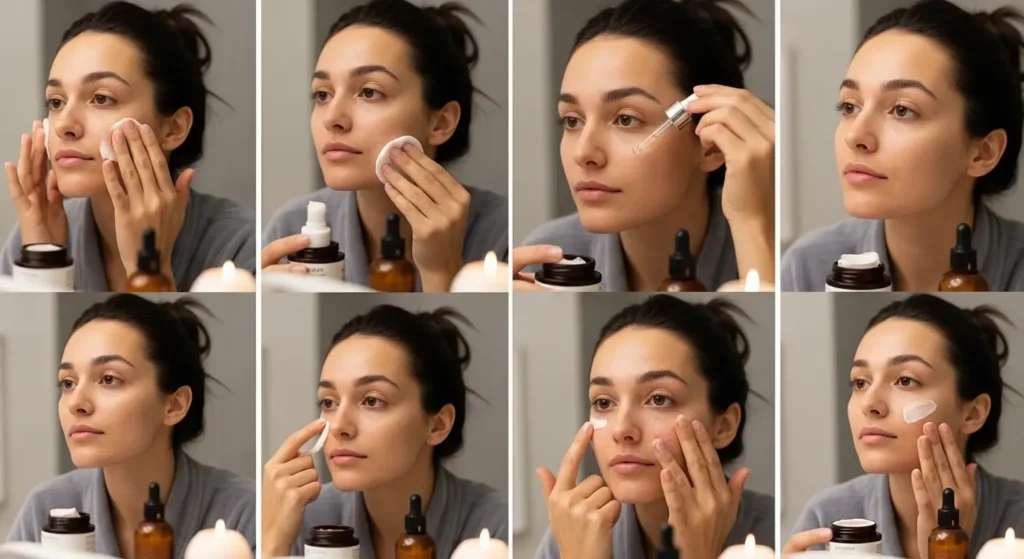
The very first step of your night skin routine is cleansing, and we’re not talking about a half-hearted splash of water. Start with an oil-based cleanser or balm, massaging it onto dry skin for about a minute — this gently dissolves makeup, sunscreen, and excess oil without stripping your skin’s natural barrier. Dot & Key Follow this with a gentle water-based cleanser to remove any remaining residue. This double cleanse method ensures your skin is genuinely clean before you layer anything on top of it. Think of it as clearing the whiteboard before you start writing — anything left behind will just block your other products from doing their job. Night cleansing removes sunscreen, oil, and environmental debris accumulated throughout the day, and failing to do so means all that grime accumulates on your pillow and gets pressed against your skin for eight hours every single night. Robb Report Not exactly the beauty sleep you were hoping for.
Step 2 — Tone and Prep Your Skin
Once your face is clean, a toner or essence is your next move in the night face routine. This step often gets skipped because people aren’t sure what it actually does — but it’s worth understanding. A well-chosen toner rebalances your skin’s pH after cleansing, preps the surface to better absorb the serums and treatments that follow, and can deliver a quick boost of hydration. For nighttime use, look for toners with ingredients like lactic acid, hyaluronic acid, or glycerin to give your skin a boost of moisture and prep it for the next steps. Dr Sabrina™ Avoid alcohol-based toners at night, as these can be drying and counterproductive when your goal is repair and hydration. Apply your toner by gently patting it into your skin with clean hands — never drag or rub, as this creates unnecessary friction on skin that’s already been working hard all day.
Step 3 — Apply a Targeted Serum
If toner is the appetizer, your serum is the main course of your nighttime skincare routine. This is where the real targeted treatment happens. Serums are concentrated, lightweight formulas designed to penetrate deeply and deliver specific active ingredients to where your skin needs them most. For nighttime use, the most popular and effective options are hyaluronic acid serums for intense hydration, niacinamide for pore refinement and brightening, or vitamin C if you prefer to use it in the evening for its repair properties. Apply two to three drops and gently press — not rub — the serum into your skin, including your neck and décolletage, which are areas that often get completely forgotten. Give the serum at least 60 seconds to absorb before moving on to the next step, and let it work its quiet magic while you set up the rest of your routine.
Step 4 — Eye Cream for That Delicate Zone
The skin around your eyes is the thinnest and most delicate on your entire face, and it absolutely deserves its own dedicated treatment in your nightly face care routine. Eye creams are specifically formulated to address the unique concerns of this area — puffiness, dark circles, fine lines, and loss of firmness — with gentler, more targeted ingredients than a regular face moisturizer can safely deliver. Use your ring finger (which naturally applies the least pressure) to gently pat a tiny amount of eye cream along the orbital bone — not directly onto the lash line or lid. Apply this step before your heavier moisturizer to ensure the lighter formula can penetrate without being blocked by a thick cream. Consistency is everything with eye cream; don’t expect overnight miracles, but trust that after four to six weeks of nightly use, the difference will be genuinely noticeable.
Step 5 — Retinol or Active Treatment (The Game-Changer)
If there is one single ingredient that dermatologists universally agree belongs in a night skin routine, it’s retinol. Retinoids — vitamin A derivatives — are widely used to improve texture, clarity, and cell turnover, and are championed as one of the most effective ways to preserve skin’s youthfulness. They are best used at bedtime, as they can be degraded by sunlight and also make skin more sensitive to UV exposure. Robb Report If you’re new to retinol, start slow — use it every two to three nights and gradually build frequency as your skin adapts. Apply a pea-sized amount to your entire face (avoiding the eye area) and let it fully absorb before your moisturizer goes on top. Not ready for retinol? Bakuchiol is a brilliant plant-based alternative that delivers similar cell-turnover benefits with far less irritation, making it perfect for sensitive skin types who still want to reap the anti-aging rewards of this step.
Step 6 — Lock In Moisture With a Night Cream
Your night cream is the protective cocoon that locks in everything you’ve applied so far and provides your skin with the rich, reparative hydration it needs to work through the night. Nighttime moisturizers should focus on ingredients that repair damage and lock in hydration, as opposed to the lightweight formulas better suited for daytime wear under SPF. Versed Look for ingredients like ceramides to reinforce your skin barrier, peptides to support collagen production, and shea butter or squalane for nourishing moisture that doesn’t feel greasy. Apply your night cream in gentle upward strokes — never downward, which can contribute to sagging over time — and extend it down to your neck. A product like The Ordinary’s Natural Moisturizing Factors, which combines hyaluronic acid, amino acids, and fatty acids, provides both immediate and lasting hydration and is designed to mimic your skin’s own natural hydration system. The Ordinary At this point in your night time face routine, your skin is getting genuinely taken care of.
Step 7 — Seal It All With a Face Oil or Sleeping Mask
The final step is optional but absolutely worth it, especially if you have dry or dehydrated skin. A face oil applied as the very last step in your night skin routine seals in all the moisture and active ingredients beneath it, acting as a breathable protective film that prevents transepidermal water loss overnight. Choose oils like rosehip (rich in vitamin A and antioxidants), marula (fast-absorbing and non-comedogenic), or squalane (suitable for all skin types). Alternatively, a sleeping mask — also applied as the last step — delivers an extra hit of concentrated hydration and is a brilliant option for two to three nights per week when your skin needs extra love. Slugging masks and overnight treatments lock in hydration and protect your skin barrier beautifully, and you can look for formulas with hyaluronic acid, vitamin C, or niacinamide to wake up to dewy, glowing skin. Ulta Beauty
Tailoring Your Nightly Face Care Routine to Your Skin Type
No two people have exactly the same skin, which means the best nighttime skincare routine is always one that’s been customized to your specific needs. The seven steps above form the foundational framework, but the products within each step should absolutely be chosen with your skin type in mind.
Night Skin Routine for Oily Skin
If your skin leans oily, you might be tempted to skip moisturizer — but this is one of the most common and damaging mistakes in any night face routine. Skipping moisture actually signals to your skin to produce more oil to compensate for the perceived dryness, which creates a vicious cycle. Instead, opt for gel-based or water-gel moisturizers that hydrate without adding heaviness. Use a foaming cleanser as your second cleanse step, choose a niacinamide serum to regulate sebum production, and skip the face oil at the end — your skin is already producing its own. Lightweight hydration, strategic actives, and a consistent cleansing routine are the pillars of a great night skin routine for oily skin types.
Nighttime Skincare Routine for Dry and Sensitive Skin
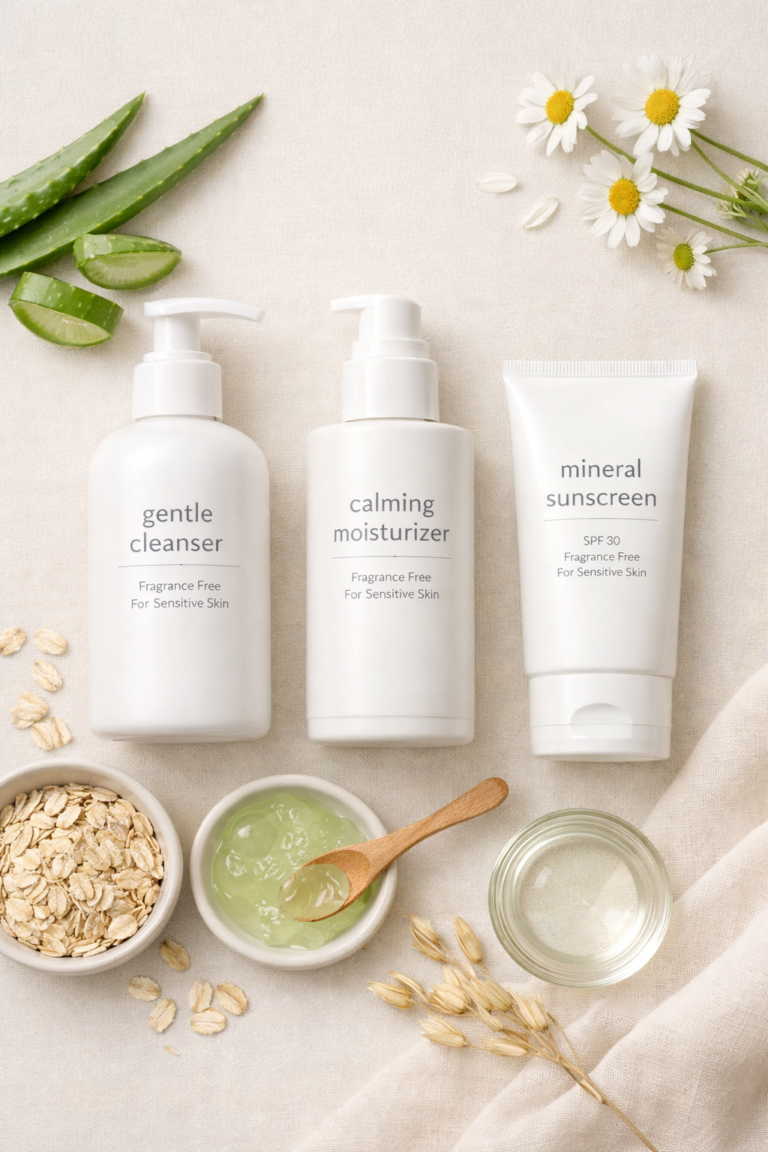
Dry and sensitive skin types, on the other hand, should lean into richness and comfort. Dry skin craves rich hydration and barrier support — use creamy cleansers, layer hyaluronic acid under a thicker moisturizer with ceramides, and seal with facial oil. Gentle hydration masks a couple of times a week work wonders, and actives should be introduced slowly to avoid irritation. Dot & Key If retinol feels too aggressive, start with bakuchiol or a gentle lactic acid serum two nights per week. Fragrance-free products are your best friend, and don’t underestimate the power of a silk pillowcase to reduce friction and prevent moisture loss as you sleep.
Top Product Recommendations for Your Night Time Face Routine
Choosing the right products can make or break your results, so here are five trustworthy picks that work beautifully across a range of budgets and skin types.
| Product | Key Benefits | Best For |
|---|---|---|
| The Ordinary Retinol 0.5% in Squalane | Supports cell turnover, reduces fine lines | Beginners new to retinol |
| CeraVe Skin Renewing Night Cream | Ceramides + peptides, repairs barrier | Dry and normal skin types |
| Paula’s Choice 1% Retinol Treatment | Potent anti-aging, smoothing formula | Experienced retinol users |
| La Roche-Posay Toleriane Double Repair Moisturizer | Ceramides, niacinamide, gentle formula | Sensitive and oily skin |
| Drunk Elephant T.L.C. Framboos Glycolic Night Serum | AHA/BHA exfoliation, brightening | Dull, textured, uneven tone |
The Ordinary Retinol 0.5% in Squalane is a brilliant entry point for anyone nervous about retinol, delivering genuine results without the harsh peeling associated with higher concentrations. CeraVe’s Skin Renewing Night Cream is a dermatologist-beloved staple that combines ceramides and peptides in a rich but non-greasy formula, making it ideal for anyone whose skin feels tight and parched by morning. Paula’s Choice 1% Retinol Treatment is for those who have graduated beyond starter formulas and want a more potent, clinically backed option in their night skin routine. La Roche-Posay Toleriane Double Repair Moisturizer is a gentle giant — fragrance-free, ceramide-rich, and calming — perfect for reactive skin that needs moisture without drama. Drunk Elephant’s Framboos Glycolic Serum is the brightening powerhouse for anyone dealing with dullness and uneven texture, delivering AHA and BHA exfoliation while you sleep. (For more product insights, see our [internal guide to choosing skincare actives for beginners] and our [internal deep dive into anti-aging serums that actually work].)
Bedroom Habits That Supercharge Your Night Skin Routine
Your night skin routine doesn’t end the moment you put down your moisturizer. The environment you sleep in and the habits you carry into the bedroom have a significant impact on whether all that effort actually pays off. Silk pillowcases are a worthy upgrade — because silk is a smoother surface than cotton, it’s easier for your skin to glide across without tugging or tension, and silk doesn’t wick away moisture the way cotton does. Versed Wash your pillowcases at least once a week to prevent bacterial buildup from negating all the cleansing work you put in at night. For optimal skin and overall health, aim for seven to nine hours of quality sleep each night, as this is when the skin’s repair process truly peaks. Ulta Beauty Adding a humidifier to your bedroom is another underrated move — it prevents moisture loss through the air, meaning your night cream doesn’t have to work quite as hard. And drinking adequate water throughout the day (not right before bed, which will have you up all night) keeps your skin plump and hydrated from the inside out, no serum required.
Common Mistakes That Wreck Your Nighttime Skincare Routine
Even the most well-intentioned nightly face care routine can go sideways if a few key mistakes creep in. The biggest offender is layering products incorrectly — using a thick oil before a water-based serum, for example, means the serum physically cannot penetrate through the oil barrier and simply sits on the surface, wasted. Another common error is mixing incompatible actives — retinol and AHA/BHA exfoliants, for instance, should not be used on the same night, as the combination is far too irritating for most skin types and can seriously disrupt the skin barrier. Going too fast with new actives is another trap beginners fall into; patience and gradual introduction always win in skincare. And finally, inconsistency is the silent killer of any night skin routine — even the most effective products need weeks of consistent nightly use to show real results. Commit to the routine for at least 28 days (one full skin cell cycle) before making any judgments about whether it’s working.
For authoritative guidance on building effective skincare routines backed by dermatological research, resources like Healthline’s skincare guides and The American Academy of Dermatology are excellent starting points. You might also find Boots’ expert skincare advice helpful for in-depth ingredient breakdowns.
Conclusion
Building a consistent, well-ordered night skin routine is one of the most powerful things you can do for your skin — and honestly, for your overall sense of self-care and wellbeing. The seven steps we’ve covered today aren’t about perfection or an overwhelming product collection. They’re about working with your skin’s natural biology, giving it the right ingredients in the right order so it can do what it already knows how to do: repair, replenish, and renew. Your skin is already repairing while you sleep — give it the support it deserves, and you’ll wake up to healthier, more radiant skin. Dot & Key Start with the basics, be consistent, and adapt as your skin tells you what it needs. The best nighttime skincare routine is always the one you’ll actually do every single night.
FAQs
1. What is the correct order for a night skin routine? The correct order for your night skin routine is: double cleanse → toner → serum → eye cream → retinol or active treatment → night cream → face oil or sleeping mask. Always apply products from thinnest to thickest consistency for maximum absorption.
2. Can I skip moisturizer in my nighttime skincare routine if I have oily skin? No — skipping moisturizer is actually counterproductive for oily skin. When your skin doesn’t receive enough hydration, it compensates by producing more oil. Opt for a lightweight, gel-based formula instead of a rich cream to keep your night skin routine balanced without adding heaviness.
3. How often should I use retinol in my night face routine? If you’re a beginner, start using retinol two to three nights per week and gradually increase frequency over four to six weeks as your skin builds tolerance. Never use it on the same night as AHA or BHA exfoliants to avoid irritation.
4. Is a nightly face care routine really necessary if I work out a lot? Absolutely — in fact, if you’re a fitness enthusiast who sweats regularly, a thorough nightly face care routine becomes even more important. Sweat, combined with daily pollution and SPF, can seriously clog pores if not properly removed each evening. A double cleanse is especially valuable for active women.
5. How long before I see results from a nighttime skincare routine? Most dermatologists recommend giving any new nighttime skincare routine at least 28 days of consistent use before evaluating results, as this aligns with one full skin cell turnover cycle. Hydration improvements are often visible within a week, while texture and tone changes from actives like retinol typically take six to twelve weeks of regular use.
Learn more
Natural Skincare Routine for Healthy Skin at Any Age
Anti Aging Skincare That Keeps Your Skin Youthful and Glowing



2 Comments