Best Facial Moisturizer for Sensitive Skin: 5 Proven & Powerful Choices
Cruelty free cosmetics have changed the beauty game — and when it comes to skincare, finding the right facial moisturizer for sensitive skin can feel like searching for a needle in a haystack. Your skin flares up. It stings. It gets red after trying a new product. Sound familiar?
If you have sensitive skin, you already know the struggle. Most moisturizers promise miracles but deliver irritation. Whether you’re a busy woman squeezing in a skincare routine between meetings, a fitness enthusiast dealing with post-workout redness, or a complete beginner just trying to figure out where to start — this guide is for you.
We’ve done the research so you don’t have to. Below, you’ll find everything you need to know about choosing the right face moisturizer for sensitive skin, including our top product picks, ingredient tips, and a simple routine you can follow today.
Why Sensitive Skin Needs a Special Moisturizer
Let’s be honest — not all moisturizers are created equal. And if your skin is sensitive, using the wrong one isn’t just ineffective. It can actually make things worse.
Sensitive skin has a weaker barrier. Think of your skin barrier like a brick wall. In healthy skin, those bricks sit tight, keeping moisture in and irritants out. In sensitive skin, the wall has gaps — and that’s where the trouble starts.
A good face lotion for sensitive skin doesn’t just hydrate. It actively supports and reinforces that barrier. Without the right moisturizer, your skin is essentially unprotected against environmental stressors, harsh ingredients, and even your own sweat.
What Makes Skin “Sensitive”?
Sensitive skin isn’t a diagnosis — it’s a description. It usually means your skin reacts more easily than average to:
- Fragrances and dyes
- Alcohol-based products
- Extreme weather
- Certain fabrics or detergents
- Stress and hormonal changes
You might notice redness, itching, burning, or dryness after using a new product. Some people have sensitive skin all the time. Others develop it after overusing harsh exfoliants or stripping cleansers.
The Most Common Triggers to Watch Out For
Here’s a quick reference for what commonly sets off sensitive skin:
| Trigger | Why It’s Problematic |
|---|---|
| Synthetic fragrance | Top cause of contact dermatitis |
| Alcohol (denatured) | Disrupts the skin barrier |
| Sulfates | Strip natural oils |
| Parabens | Can cause allergic reactions in some |
| Essential oils | Surprisingly irritating for many skin types |
Knowing your triggers is half the battle. The other half? Picking the right moisturizer for sensitive face skin that avoids all of the above.
What to Look for in a Face Moisturizer for Sensitive Skin
Okay, so you know what to avoid. But what should you actually be looking for? Here’s the good news — the best ingredients for sensitive skin are usually simple, gentle, and well-researched.
Ingredients That Soothe and Protect
When scanning ingredient lists, these are your best friends:
- Ceramides — Rebuild and reinforce the skin barrier
- Hyaluronic acid — Draws moisture into the skin without causing irritation
- Niacinamide — Calms redness and strengthens the barrier over time
- Colloidal oatmeal — Clinically proven to soothe itching and inflammation
- Glycerin — A gentle humectant that pulls moisture from the air into your skin
- Aloe vera — Natural anti-inflammatory with a cooling effect
- Panthenol (Vitamin B5) — Deeply hydrating and healing
These ingredients work together to calm irritation, lock in moisture, and protect your skin throughout the day. If a face lotion for very sensitive skin contains most of these, you’re on the right track.
Ingredients to Avoid
Now for the red flags. Avoid these when shopping for a face moisturizer sensitive skin formula:
- Fragrance (listed as “parfum” or “fragrance”) — Even natural scents can irritate
- Denatured alcohol — Drying and damaging to the barrier
- Sodium lauryl sulfate (SLS) — Stripping and harsh
- Menthol or camphor — Cooling sensation, but irritating underneath
- Harsh exfoliants — Like AHAs/BHAs in high concentrations without buffering
Pro tip: When in doubt, less is more. A moisturizer with a shorter, simpler ingredient list is usually better for reactive skin types.
How to Apply Your Moisturizer for Sensitive Face the Right Way
Even the best facial moisturizer for sensitive skin won’t work if you’re applying it wrong. Here’s how to get the most out of every pump or scoop:
- Cleanse first — Always apply to clean, slightly damp skin. Moisture helps lock in the product better.
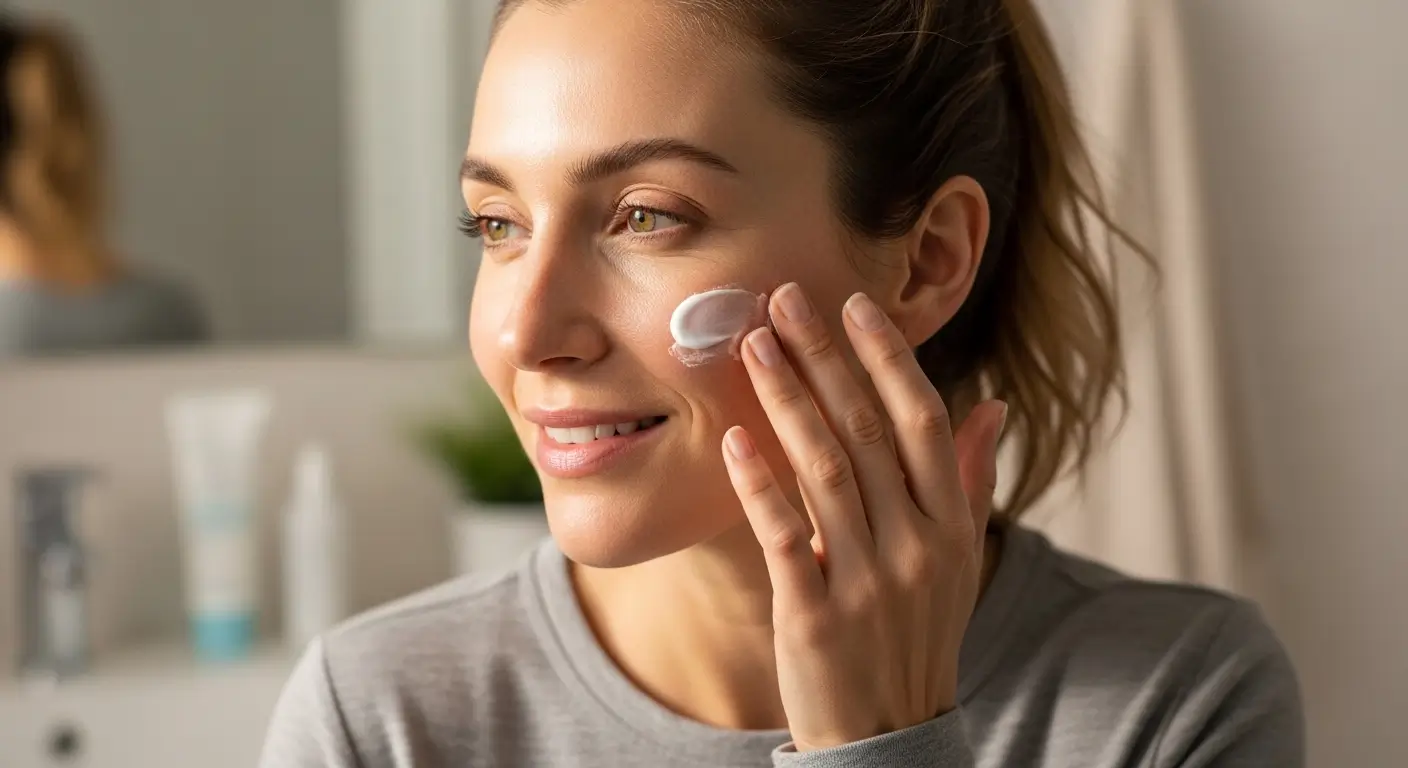
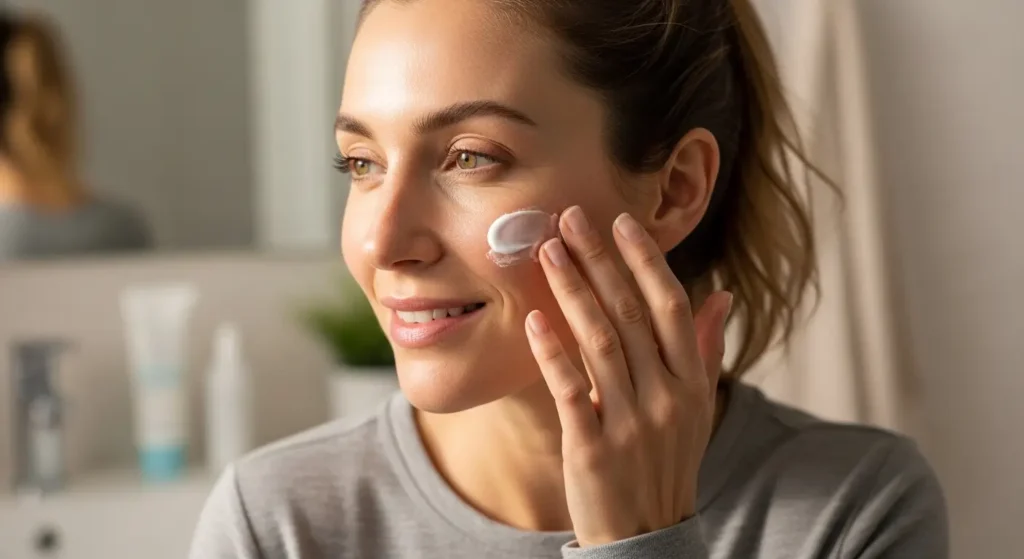
- Use a gentle touch — Don’t rub or tug. Pat and press the moisturizer in with your fingertips.
- Apply while your skin is still damp — Within 60 seconds of cleansing is ideal. This helps seal in hydration.
- Don’t forget your neck — Your neck is just as exposed to environmental stress as your face.
- Use SPF in the morning — Layer a mineral sunscreen over your moisturizer to protect your sensitive skin from UV damage.
Less friction means less irritation. It sounds small, but it makes a real difference.
Top 5 Best Facial Moisturizers for Sensitive Skin (Dermatologist-Approved)
Here are five tried-and-tested picks that real women with sensitive skin — and dermatologists — consistently recommend. These products are gentle, effective, and formulated specifically with reactive skin types in mind.
1. CeraVe Moisturizing Cream
CeraVe has become a cult favorite for good reason. This rich, non-greasy cream is packed with three essential ceramides and hyaluronic acid. It’s developed with dermatologists, fragrance-free, and suitable even for eczema-prone skin.
Key benefits:
- Restores and maintains the natural skin barrier
- 24-hour hydration with MVE technology
- Non-comedogenic (won’t clog pores)
Best for: Dry to very dry sensitive skin, anyone with eczema or psoriasis
2. La Roche-Posay Toleriane Double Repair Face Moisturizer
La Roche-Posay is a dermatologist-recommended brand known for its commitment to sensitive skin formulations. The Toleriane Double Repair Moisturizer is oil-free, lightweight, and fortified with ceramides, niacinamide, and prebiotic thermal water.
Key benefits:
- Rebalances the skin’s microbiome
- Reduces visible redness and irritation
- Suitable for oily and combination sensitive skin
Best for: Busy women who want a lightweight daily moisturizer that won’t shine or clog pores
3. Neutrogena Hydro Boost Water Gel
If you prefer a gel texture, this is your go-to. Neutrogena’s Hydro Boost is oil-free, fragrance-free, and delivers intense hydration through its hyaluronic acid formula. It absorbs fast — perfect if you’re always on the go.
Key benefits:
- Clinically proven to boost skin’s hydration levels
- Lightweight and fast-absorbing
- Great under makeup
Best for: Fitness enthusiasts and busy women who need quick, effective hydration without heaviness
4. First Aid Beauty Ultra Repair Cream
This one is a powerhouse for very sensitive, distressed skin. It contains colloidal oatmeal (an FDA-approved skin protectant), shea butter, and allantoin to deeply nourish and calm reactive skin.
Key benefits:
- Soothes eczema and chronic dryness
- Rich but non-greasy texture
- Free from parabens, artificial colorants, and fragrances
Best for: Anyone dealing with flare-ups, rosacea, or intense dryness
5. Vanicream Moisturizing Skin Cream
Vanicream is the gold standard for ultra-sensitive skin. It was specifically formulated for people who react to almost everything. No dyes. No fragrances. No lanolin. No parabens. Just pure, effective hydration.
Key benefits:
- Formulated for the most reactive skin types
- Non-comedogenic and hypoallergenic
- Thick, barrier-restoring formula
Best for: Beginners who are just starting to build a sensitive skincare routine and need something completely safe
Face Lotion for Very Sensitive Skin vs. Regular Moisturizer — What’s the Difference?
You might be wondering — can’t I just use any moisturizer? Technically, yes. But practically? Not without risk.
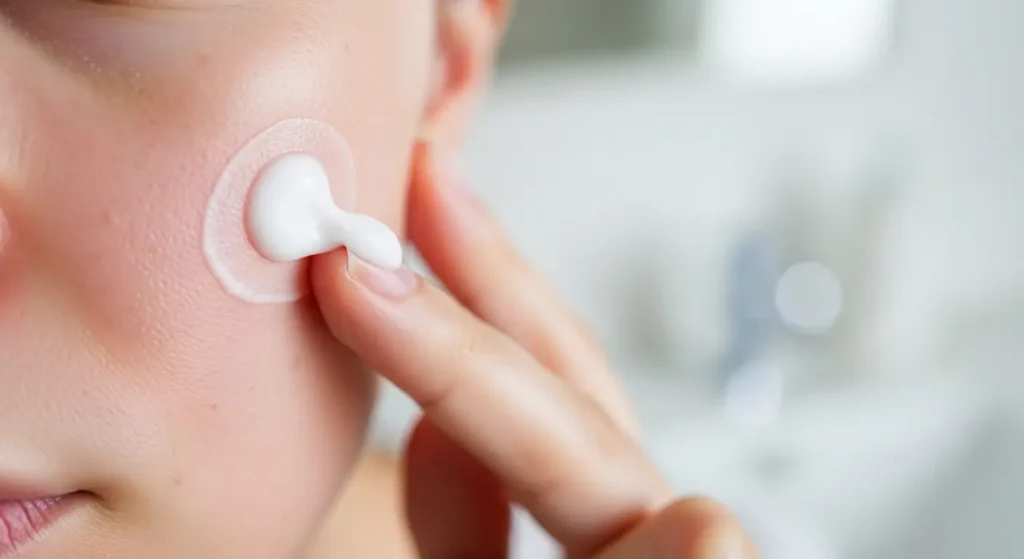
Regular moisturizers are often formulated with fragrance, alcohol, and other additives that improve texture or scent — but do nothing for your skin barrier. A face lotion for very sensitive skin, on the other hand, is specifically designed to:
- Avoid known irritants
- Reinforce the skin’s natural defense system
- Deliver moisture without triggering reactions
Think of it this way: a regular moisturizer is like a regular umbrella in a light drizzle. A moisturizer for sensitive skin is like a full rain jacket in a storm. Both cover you, but only one truly protects you.
Building a Gentle Skincare Routine Around Your Moisturizer
Your facial moisturizer for sensitive skin doesn’t work in isolation. It works best as part of a complete, gentle routine. Here’s how to build one without overwhelming your skin.
Morning Routine Tips
- Rinse with cool or lukewarm water (skip the cleanser if your skin feels clean)
- Apply a hydrating toner or essence (optional, but helpful)
- Apply your face moisturizer for sensitive skin
- Finish with a mineral SPF 30 or higher
Keep it simple. The fewer products, the fewer chances of irritation.
For a deeper dive into building your AM routine, check out this helpful guide: Natural Skincare Routine for Healthy Skin at Any Age — it covers exactly how to layer products without overdoing it.
Night Routine Tips
Nighttime is when your skin repairs itself. This is the moment to go a little richer with your moisturizer if needed.
- Double cleanse if you’ve worn makeup or sunscreen
- Apply any actives (keep these gentle — think niacinamide, not retinol, if you’re a beginner)
- Use a slightly thicker version of your moisturizer or add a facial oil
- Sleep on a clean pillowcase
Need help with your evening skincare? This step-by-step breakdown is a game-changer: Night Skin Routine: The Correct Skincare Order Before Bed — 7 Easy, Proven Steps
Expert Resources Worth Bookmarking
When it comes to skincare science, these are trusted external sources you can rely on:
- American Academy of Dermatology — Sensitive Skin Tips — Dermatologist-approved guidance on managing sensitive and reactive skin
- National Eczema Association — Skincare Guide — Especially useful if your sensitive skin is connected to eczema or atopic dermatitis
- Paula’s Choice Ingredient Dictionary — An excellent free tool to decode ingredient labels
Conclusion
Finding the perfect facial moisturizer for sensitive skin doesn’t have to feel overwhelming. The key is keeping things simple: look for gentle, barrier-supporting ingredients, avoid known irritants, and apply with a light hand. Whether you go with a drugstore staple like CeraVe or splurge on a dermatologist-favorite like La Roche-Posay, consistency is what truly transforms your skin over time.
Your skin deserves kindness — and the right face lotion for sensitive skin is the first step toward giving it exactly that.
Start small. Patch test new products. And remember: the best skincare routine is the one you actually stick to.
Frequently Asked Questions
1. How do I know if a moisturizer is safe for sensitive skin? Look for products labeled “fragrance-free,” “hypoallergenic,” and “dermatologist-tested.” Always patch test on your inner arm for 24–48 hours before applying to your face. Avoid products with alcohol, synthetic fragrance, or sulfates high up in the ingredient list.
2. Can I use a face moisturizer for sensitive skin if I also have oily skin? Absolutely. Sensitive and oily skin can coexist — it’s called combination-sensitive skin. Opt for a lightweight, oil-free gel moisturizer like Neutrogena Hydro Boost. These hydrate without adding shine or clogging pores.
3. How often should I apply a facial moisturizer for sensitive skin? Twice daily is the sweet spot — once in the morning (before SPF) and once at night (as the last step in your routine). If your skin feels tight or dry mid-day, a light mist of hydrating spray can help without reapplying product.
4. Is it okay to use the same moisturizer year-round with sensitive skin? It depends on your climate. In colder, drier months, you may need a richer cream. In warmer months, a lighter lotion or gel may be enough. Pay attention to how your skin feels and adjust accordingly.
5. What’s the difference between a face lotion and a face cream for sensitive skin? Lotions have a higher water content, making them lighter and better for normal-to-oily sensitive skin. Creams are thicker and richer, making them ideal for dry or very sensitive skin. Neither is better — it all depends on your skin type and personal preference.