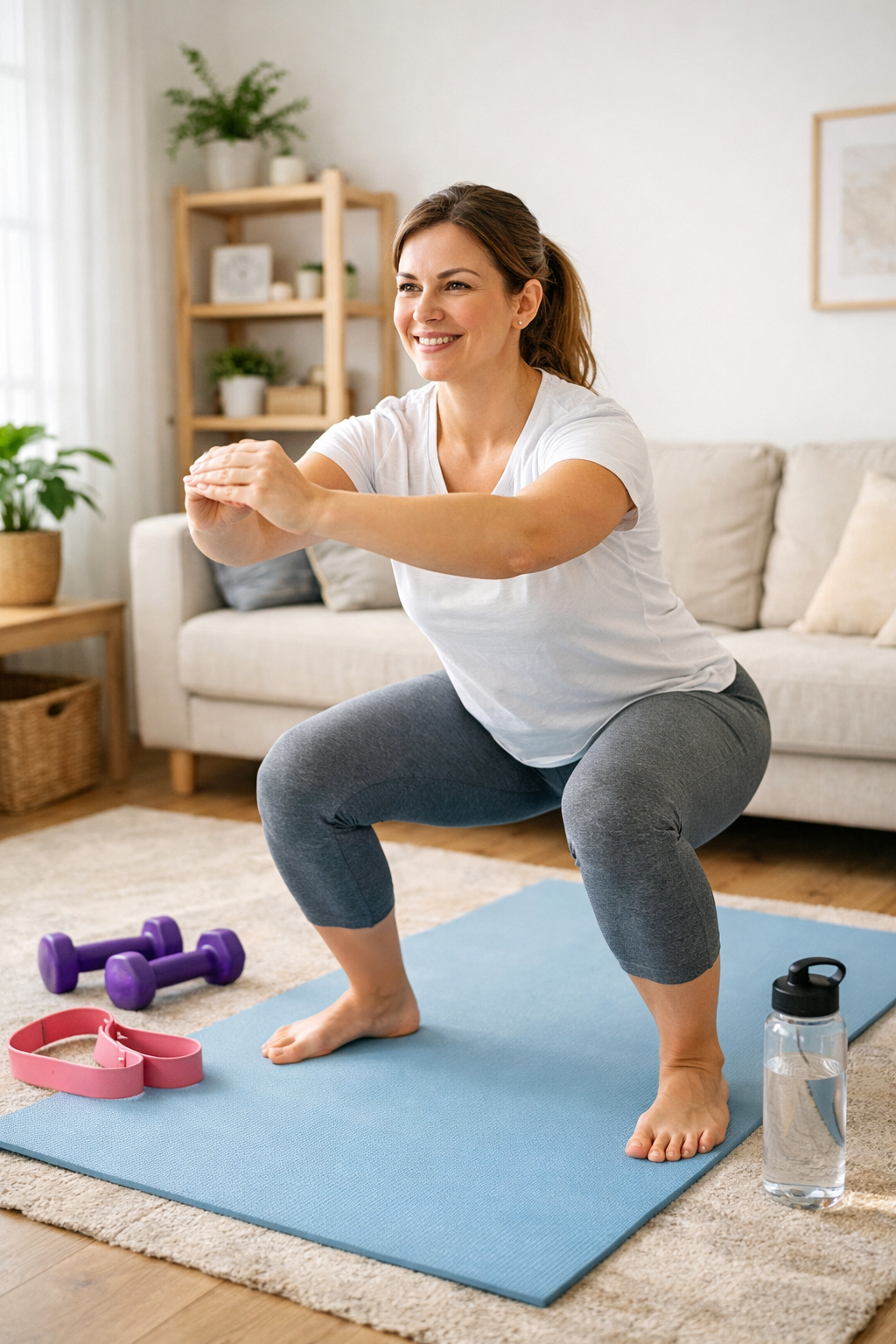
How to Get Fit at Home: Beginner’s Guide
Starting a fitness journey from home can be simple and effective with the right plan. At GlowFit, we focus on beginner-friendly routines that anyone can follow. In this guide, you’ll learn how to start getting fit at home, build strength, burn fat, and stay consistent with easy, practical workouts.
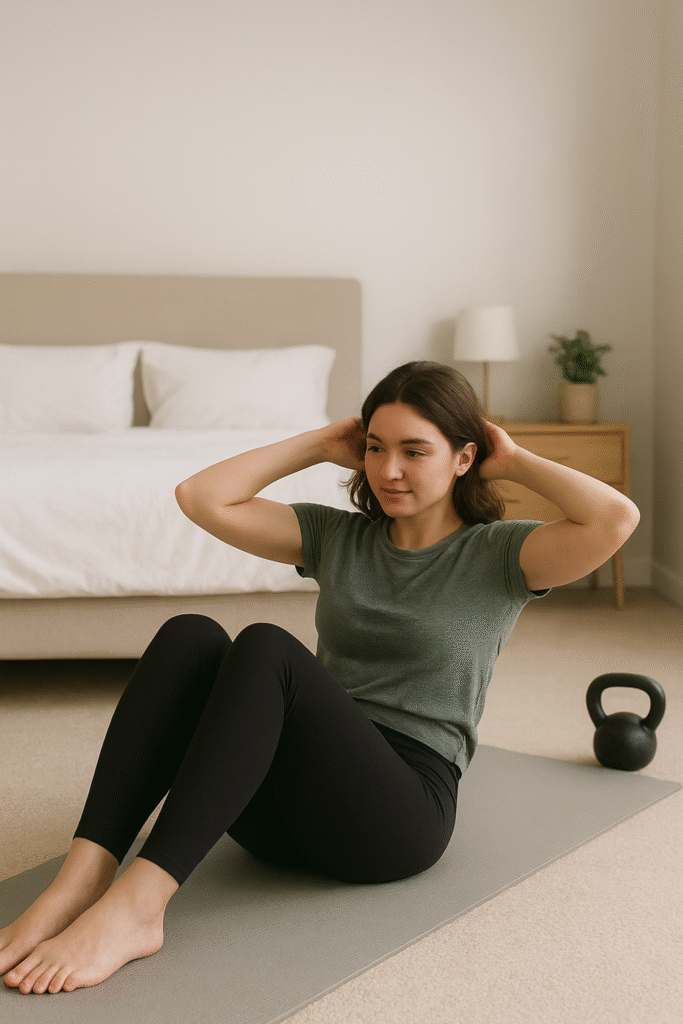
Why Getting Fit at Home Is a Smart Choice for Beginners
Starting your fitness journey at home removes many common barriers. There’s no pressure, no commute, and no fear of judgment. You control your pace, environment, and schedule.
Benefits of home fitness:
- Convenience and time efficiency
- Lower cost compared to gym memberships
- Privacy and comfort
- Easy to stay consistent
- Flexible for busy lifestyles
According to the American College of Sports Medicine (ACSM), consistency is one of the most important factors for long-term fitness success—and home workouts make consistency easier.
Understanding Fitness: What “Getting Fit” Really Meanshttps
For beginners, fitness isn’t about extreme weight loss or building a bodybuilder physique. It’s about improving overall health.
Getting fit at home means:
- Increasing daily movement
- Improving cardiovascular health
- Building basic strength
- Enhancing flexibility and mobility
- Supporting mental well-being
This guide focuses on balanced fitness, not quick fixes.
Step 1: Set Realistic Fitness Goals
Before starting, define clear and achievable goals. Avoid vague goals like “get in shape.”
Better beginner goals:
- Exercise 3–4 times per week
- Walk 20–30 minutes daily
- Do 10 push-ups (modified if needed)
- Improve energy and sleep quality
Small goals create momentum and confidence.
Step 2: Create a Simple Home Workout Space
You don’t need a full gym. A small corner of your living room is enough.
Essentials for your home workout area:
- Enough space to stretch your arms and legs
- Non-slip floor or mat
- Good ventilation
- Natural light if possible

- Extra-Thick Cushioning for Joint Comfort : Made with 10mm (2/5″) high-density NBR foam, this mat delivers plush cushioni…
- Comfort-Focused Surface for Controlled Movement : Textured foam surface helps reduce slipping on most hard floors during…
- Soft Foam Feel with Easy Care : Crafted from low-odor NBR foam that’s easy to maintain—simply wipe clean with a damp clo…

- 100 Sq. Ft. Coverage: A set of 25 foam tiles covers an impressive 100 square feet of space, with 50 border pieces for a …
- Designed for Security: These dual-sided anti-slip foam floor mats minimize the risk of accidents, making them ideal for …
- Comfortable 0.4” Thick EVA Foam: These interlocking floor mats are constructed with high-quality 0.4 inch thick EVA foam…
These items improve comfort and reduce injury risk
Step 3: Warm-Up – A Non-Negotiable Habit
Warm-ups prepare your muscles and joints, reduce injury risk, and improve performance.
5–7 minute beginner warm-up:
- March in place
- Arm circles
- Shoulder rolls
- Hip circles
- Gentle squats
The Mayo Clinic strongly recommends warming up before any physical activity to protect joints and muscles.
Step 4: Beginner-Friendly Exercises You Can Do at Home
This Beginner’s Guide to Getting Fit at Home focuses on bodyweight exercises that are safe, effective, and scalable.
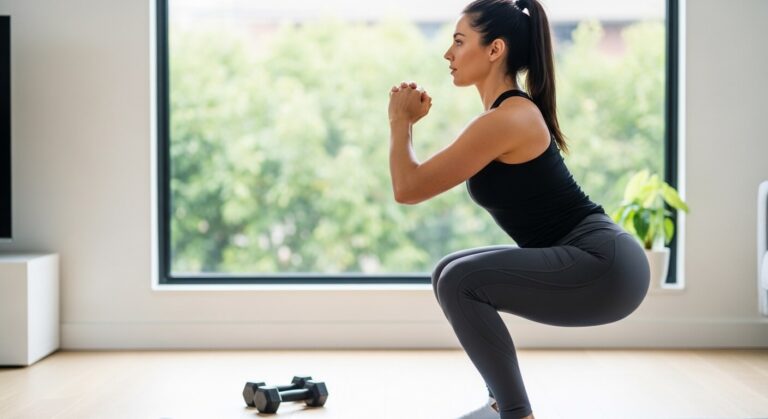
1. Squats
Targets legs and glutes
- Start with chair squats if needed
- 2–3 sets of 10–12 reps
2. Wall or Knee Push-Ups
Targets chest, arms, and core
- Keep core tight
- 2–3 sets of 8–10 reps
3. Glute Bridges
Strengthens glutes and lower back
- Lie on your back, feet flat
- 2–3 sets of 12 reps
4. Plank (Modified)
Improves core strength
- Start on knees
- Hold 15–30 seconds
5. Marching or Step Touch
Great low-impact cardio
- 1–2 minutes between exercises
Step 5: Beginner Weekly Workout Plan (At Home)
Here’s a realistic 3-day beginner plan:
Day 1 – Full Body
- Squats
- Push-ups
- Glute bridges
- Marching in place
Day 2 – Active Recovery
- Walking
- Stretching
- Mobility exercises
Day 3 – Full Body
- Chair squats
- Wall push-ups
- Plank
- Step touches
Rest days are just as important as workout days.
Step 6: Cardio at Home Without Equipment
Cardio improves heart health, endurance, and fat metabolism.
Beginner-friendly cardio options:
- Walking (indoors or outdoors)
- Marching in place
- Dancing
- Low-impact aerobics

- No electricity required manual walking treadmill – Self-powered manual treadmill operates entirely from your walking mot…
- Eco-friendly self-powered design saves energy and money – Manual treadmill requires zero electricity making it perfect f…
- Compact foldable treadmill perfect for small spaces – Space-saving manual treadmill measures 49 inches long by 23 inches…
The American Heart Association recommends at least 150 minutes of moderate activity per week for adults.

- 2-in-1 Smart Auto & HR Modes: CURSOR FITNESS elliptical trainer empowers you to customize your home workout with 12 Auto…
- Real-time LCD Monitoring: This leg exerciser electric as seen on tv, monitors time, speed, distance, calories, and strid…
- Low-Impact & Senior-Friendly: Designed by CURSOR Lab, this pedal exerciser for seniors features a unique 30% vertical li…
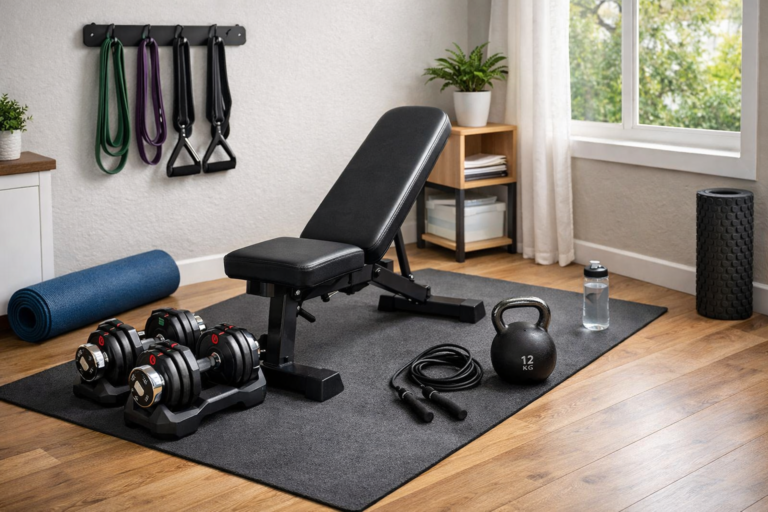
Step 7: Strength Training for Beginners at Home
Strength training builds muscle, supports joints, and boosts metabolism.
Start light and progress slowly.
No layout selected.These tools allow gradual progression without strain.
Step 8: Stretching and Mobility (Often Ignored but Crucial)
Stretching improves flexibility, posture, and recovery.
Focus on:
- Hamstrings
- Hip flexors
- Chest and shoulders
- Lower back

- Foam
- Imported
- IMPROVE MUSCLE RECOVERY – Multi-density GRID features a three-dimensional surface that provides more efficient muscle re…
According to Harvard Health Publishing, flexibility training reduces stiffness and improves range of motion.
Step 9: Nutrition Basics for Beginners
You don’t need a strict diet to get fit at home.
Simple nutrition rules:
- Eat more whole foods
- Add protein to each meal
- Drink enough water
- Avoid extreme calorie restriction
Amazon Recommendation:
- Orgain Organic Protein Powder – easy protein support
- Hydro Flask Water Bottle – hydration habit support
The CDC emphasizes balanced nutrition as a foundation for physical fitness.
Step 10: Recovery and Rest
Recovery is where progress happens.
Prioritize:
- 7–9 hours of sleep
- Rest days
- Light stretching
- Stress management

- 【100% Light Blocking Sleep Mask】Features a heightened 22mm adaptive nose bridge that effectively blocks out light and fi…
- 【Ergonomically Designed 3D Contoured Fit】Utilizes a 3D eye socket and deepened contour to provide zero eye pressure and …
- 【 Ideal for Side Sleepers & Pressure Relief】New design of 15°tilted ultra-thin eye mask ensures excellent light blocking…
improves sleep quality
Step 11: Staying Motivated at Home
Motivation will fluctuate. Systems matter more than motivation.
Tips:
- Track workouts
- Schedule workouts like appointments
- Celebrate small wins
- Follow beginner workout videos

- 13-WEEK DAILY SELF-LOVE AND GUIDE JOURNAL: Our productivity journal is also a guided journal for women and men. this sel…
- MENTAL & PHYSICAL WELLNESS: Thoughtfully designed to help you prioritize your well-being from the inside out, making it …
- DURABLE AND HIGH-QUALITY: This manifestation journal features an elegant and durable linen hardcover, measuring 5.8×8.3 …
Common Beginner Mistakes to Avoid
- Doing too much too soon
- Skipping warm-ups
- Ignoring rest days
- Comparing yourself to others
- Expecting fast results
Fitness is a long-term lifestyle, not a short-term challenge.
How Long Until You See Results?
Most beginners notice:
- Increased energy in 1–2 weeks
- Improved strength in 3–4 weeks
- Visible changes in 6–8 weeks
Consistency beats intensity every time.
Final Thoughts: Your Fitness Journey Starts at Home
This Beginner’s Guide to Getting Fit at Home proves that you don’t need perfection, expensive gear, or extreme routines to improve your health. Small, consistent actions build real results.
Start where you are. Use what you have. Progress at your pace.
Your home can be the starting point for a healthier, stronger, more confident you.
Reputable Sources
- American College of Sports Medicine (ACSM): https://www.acsm.org
- American Heart Association: https://www.heart.org
- Mayo Clinic: https://www.mayoclinic.org
- Harvard Health Publishing: https://www.health.harvard.edu
- Centers for Disease Control and Prevention (CDC): https://www.cdc.gov
You may also enjoy our guide on Proven Beginner Workout Plan to Lose Weight and Build Strength.
Read more about Home Workouts for Busy Women.
6 Comments